
What a deductible actually does in a home insurance claim
When you file a home insurance claim, the insurer does not simply write a check for the full repair bill. It subtracts your deductible first. If a burst pipe causes $6,500 in water damage and your policy carries a $1,500 deductible, the insurer's payment is $5,000. The deductible is your share of every covered loss.
This matters because it means the deductible is not a theoretical number. It is money you must have available after a loss, often quickly, while repairs are being arranged. Many homeowners choose their deductible based only on the premium cost and later discover they cannot comfortably cover the amount when a real claim arises.
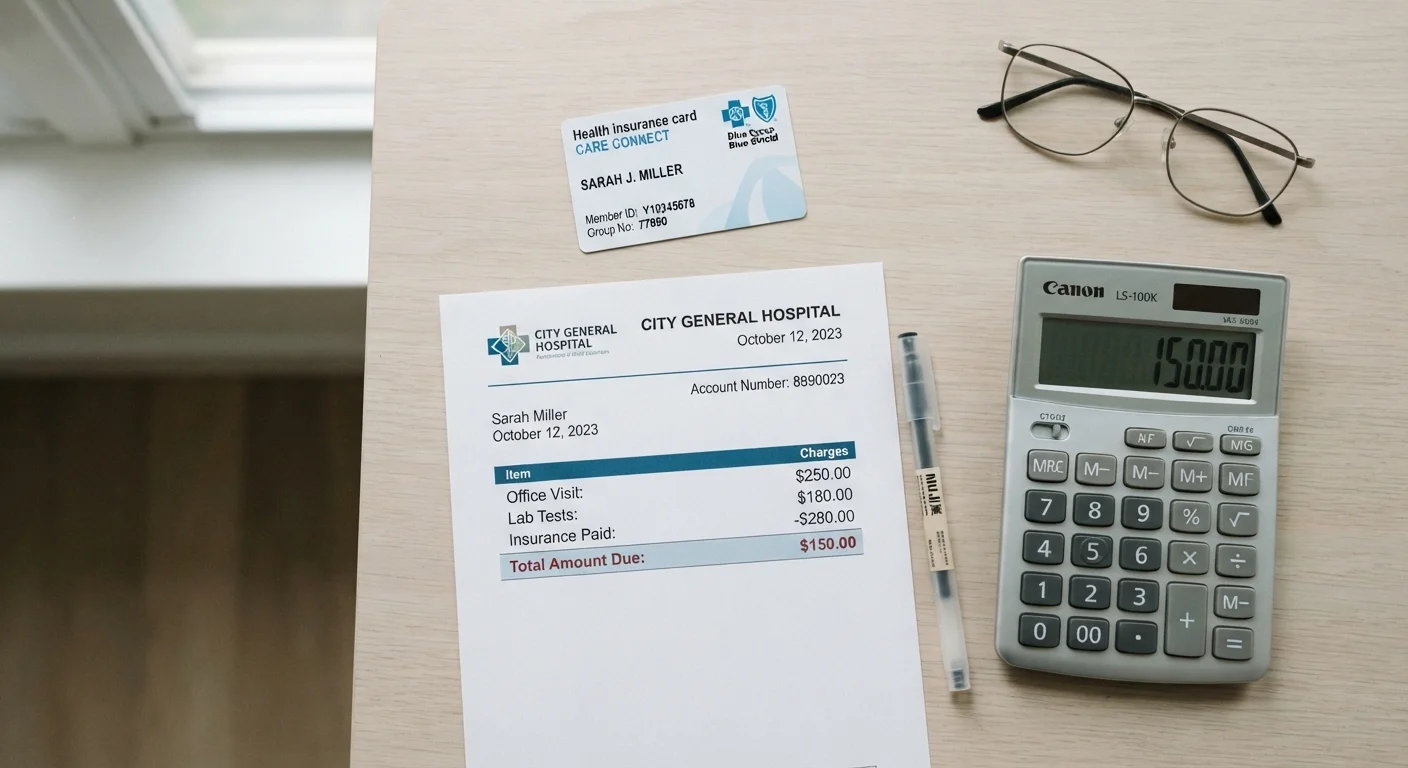
Home insurance deductibles work differently from health insurance deductibles, which accumulate toward an annual limit. Health insurance cost-sharing involves a yearly reset; home insurance applies the deductible fresh to each individual claim, every time.
The trade-off between deductible amount and premium
Insurers price policies partly based on how much financial risk the homeowner agrees to absorb. When you accept a higher deductible, the insurer's potential payout on any claim drops, and the annual premium typically falls. When you choose a lower deductible, the insurer carries more of the risk, and the premium rises to reflect that.
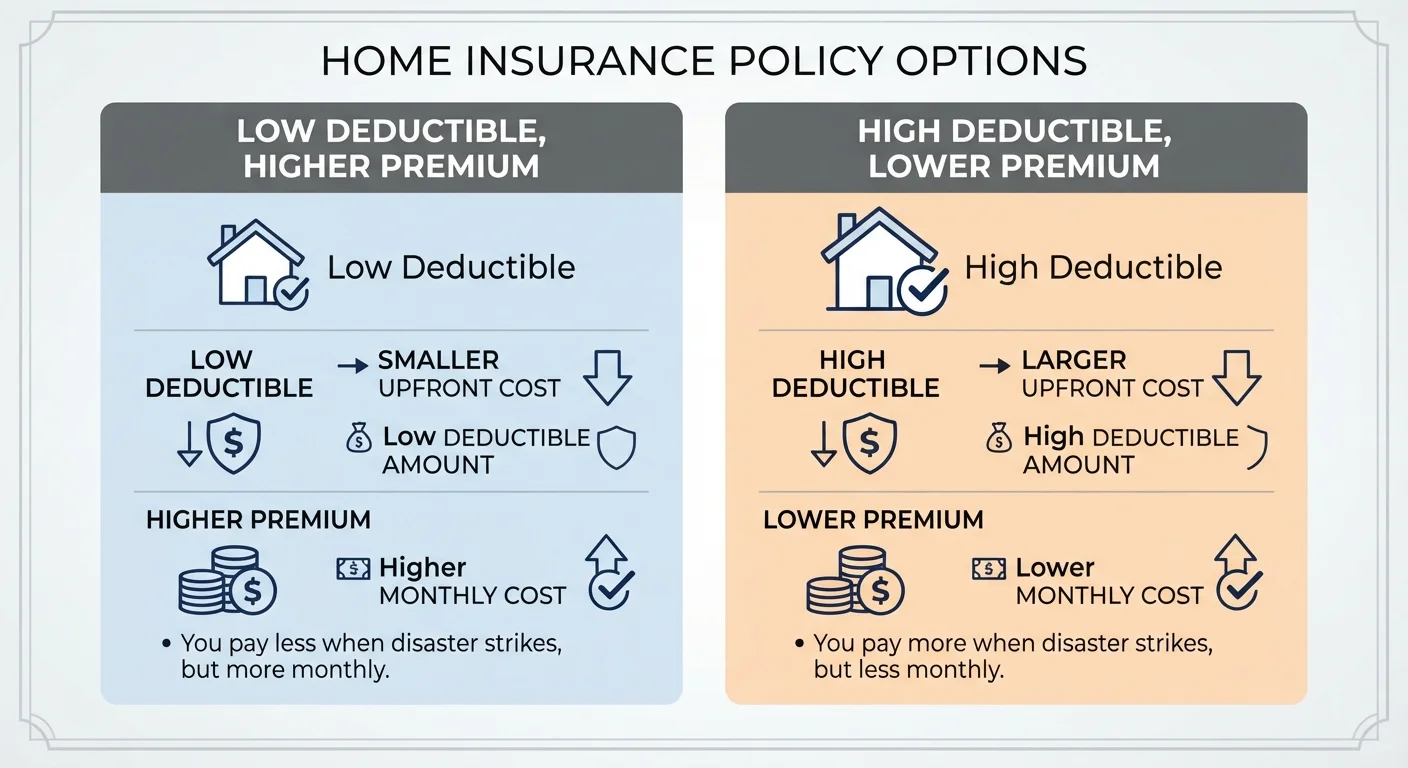
The savings from raising your deductible vary by insurer, location, and home value, but the direction of the trade-off is consistent. Moving from a $500 deductible to a $2,500 deductible can produce a noticeable drop in annual premium. Whether that drop justifies the larger out-of-pocket exposure depends on your financial cushion. A homeowner with stable savings may come out ahead over time by banking the premium difference each year. A homeowner without that buffer takes real risk if a claim arrives before the savings accumulate.
Match your deductible to your savings
Before finalizing a deductible amount, confirm that you have at least that sum accessible in a savings account. Premium savings mean little if a claim leaves you scrambling for cash you do not have. Treat the deductible as the floor for your home emergency fund, not a ceiling.
It is also worth knowing that filing a small claim can affect your premium going forward. Rate increases after a claim are not unique to auto insurance; home insurers use similar logic. If your repair cost only slightly exceeds your deductible, paying out of pocket may be less expensive over time than accepting a small payout and a possible rate increase.
Percentage deductibles and when they apply
Many policies include a standard flat-dollar deductible for most losses and a separate percentage-based deductible for specific, high-risk perils. Wind, hurricane, and hail deductibles written as percentages are common in coastal and storm-prone states. Some policies in earthquake-prone regions carry a percentage deductible for seismic damage as well.
A 1% or 2% deductible sounds modest until you apply it to your home's insured value. On a home insured for $400,000, a 2% wind deductible means $8,000 comes out of your pocket before the insurer pays anything on a wind claim. That figure can surprise homeowners who assume their standard $1,000 deductible covers all scenarios.
Your policy's declarations page lists each deductible that applies. Reading it carefully before you need to file a claim is worthwhile, since percentage deductibles are sometimes buried in endorsements rather than the main policy summary. If your area is prone to named storms, flood and storm exclusions are another layer worth reviewing at the same time, since standard policies often exclude flood damage entirely regardless of deductible structure.
How to decide what deductible amount makes sense for you
The practical question is whether you can pay the deductible without hardship if a claim happens tomorrow. If the answer is no, the deductible is too high regardless of the premium savings. A deductible you cannot actually pay defeats the purpose of having insurance.
One straightforward approach: treat the deductible amount as a minimum target for your home emergency fund. If you choose a $2,000 deductible, keep at least $2,000 accessible in savings that you do not earmark for other purposes. That way the premium savings and the out-of-pocket risk are both real, not just numbers on paper.
The choice of payout method in your policy also shapes how the deductible interacts with a real claim. Actual cash value versus replacement cost coverage determines the gross amount the insurer calculates before subtracting your deductible. On a depreciated item, actual cash value coverage may leave you with far less after the deductible than replacement cost coverage would.
A licensed insurance agent can run the specific numbers for your home's insured value and your local risk profile. This article provides general information and is not personalized insurance or financial advice. Policy terms, deductible structures, and premium impacts vary by insurer and state.
This article is for general informational purposes only and does not constitute insurance, financial, or legal advice. Coverage terms, deductibles, and premiums vary by insurer, policy, and state. Read your policy documents carefully and consult a licensed insurance professional for guidance specific to your situation.