What state-minimum coverage actually includes
State-minimum auto insurance is, in almost every state, liability-only coverage. It pays for bodily injury and property damage you cause to other people when you are at fault in an accident. It does not pay for your own injuries or repairs to your own vehicle.
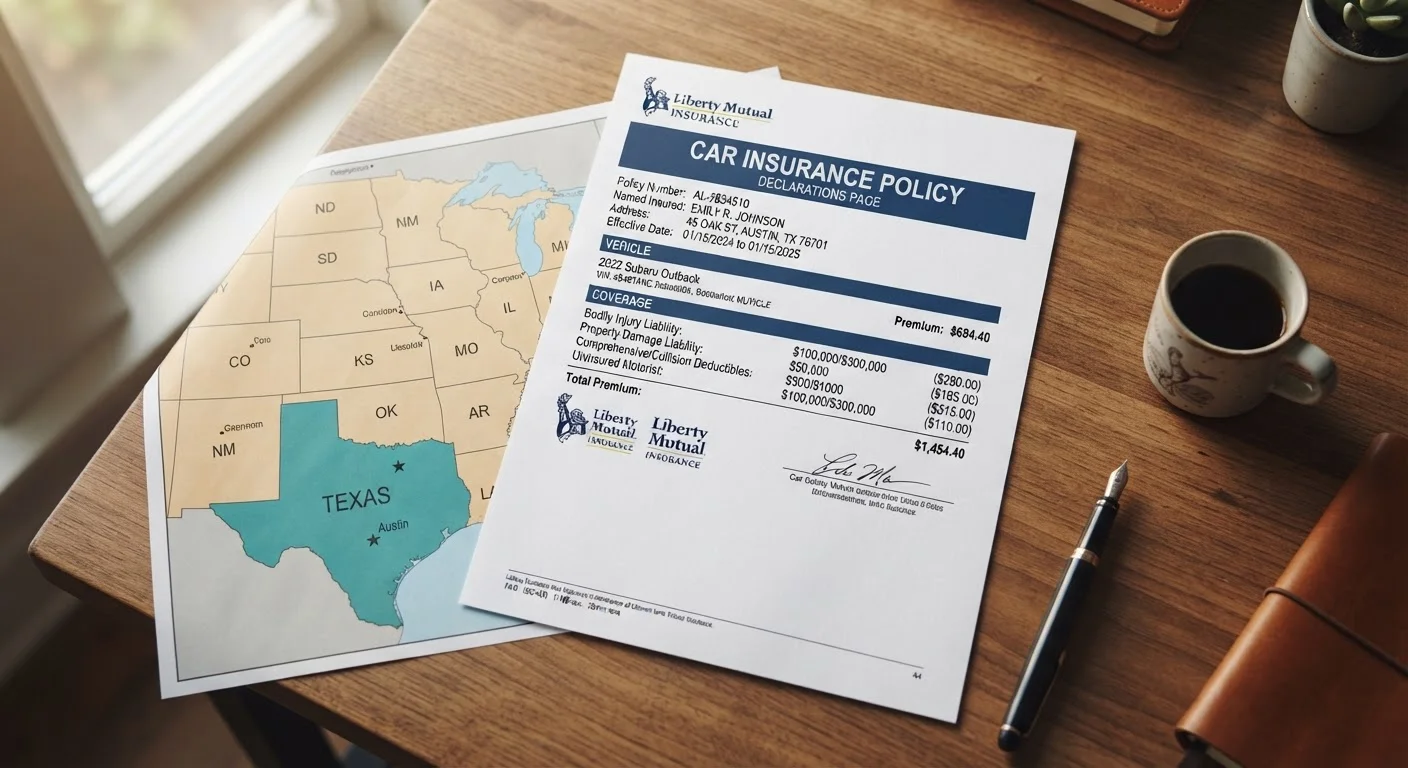
The numbers attached to a minimum policy are written as limits, for example 25/50/25, meaning $25,000 per injured person, $50,000 per accident for all injuries combined, and $25,000 for property damage. Those limits cap what your insurer will pay; anything above them falls to you personally. Minimum car insurance requirements by state explains how to read these figures and what they mean in each state.
A handful of states also require personal injury protection (PIP) or medical payments coverage as part of the minimum, but collision, comprehensive, and uninsured motorist coverage are almost never included at the state-minimum level.
Advantages of carrying only the minimum
Satisfies the legal requirement to drive
Every state except New Hampshire requires some form of liability coverage. A minimum policy keeps you compliant and avoids fines, license suspension, or registration loss.
Lower monthly or annual premiums
Because the coverage is narrow, the premium is typically lower than a full-coverage policy. For drivers with very tight budgets, this can be the difference between being insured and being uninsured.
Reasonable fit for older, low-value vehicles
If a car is worth only a few thousand dollars, paying for collision or comprehensive coverage may cost more over time than the vehicle is worth. Minimum liability on an older paid-off car can make financial sense.
No lender coverage requirements to meet
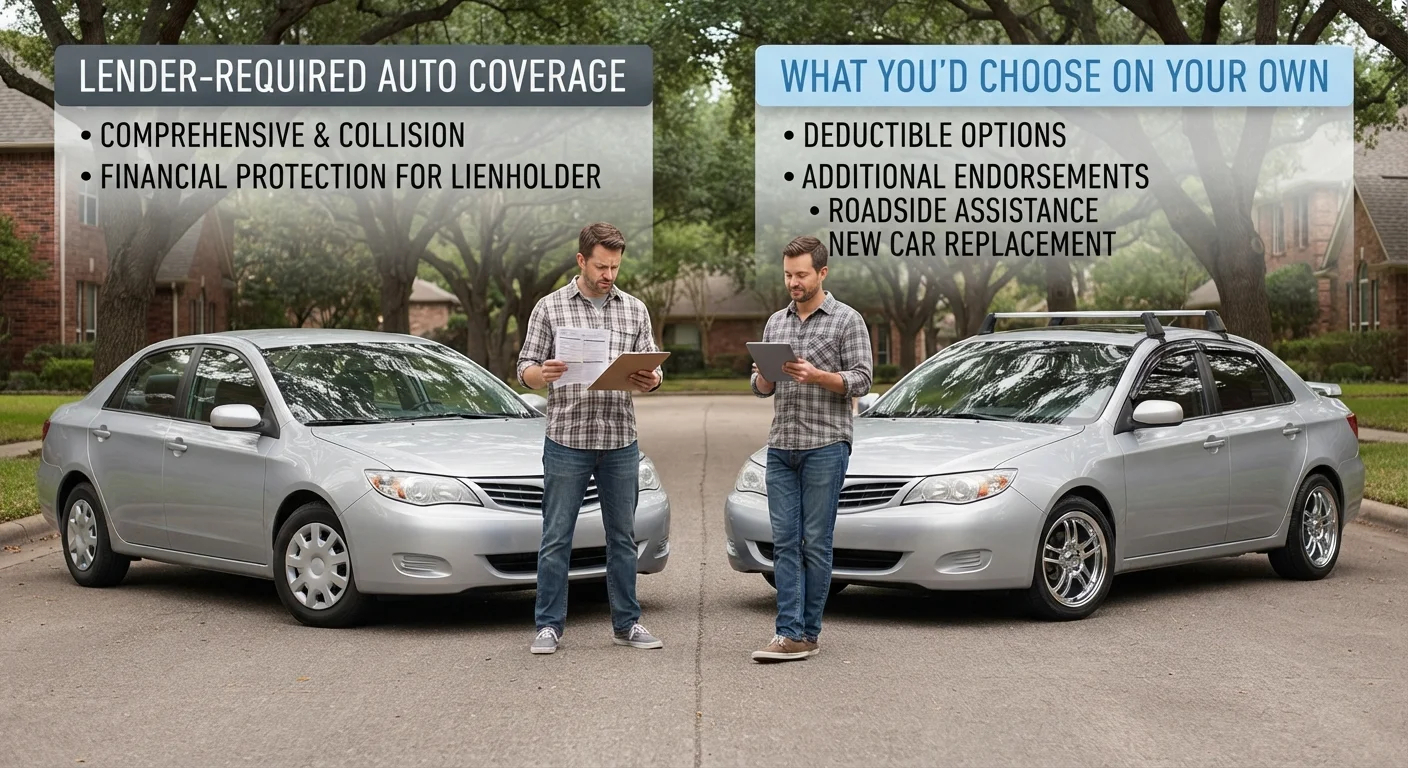
Drivers who own their vehicle outright have no lender dictating coverage levels. See how lender-required coverage differs from what you would choose independently.
The practical appeal of minimum coverage is straightforward. The premium is lower, which helps drivers who cannot afford a broader policy stay legally insured rather than go without coverage entirely. For an older car with a low market value, skipping collision and comprehensive may be a reasonable financial decision. A vehicle worth $3,000 may not justify the added cost of coverage that would, at most, pay out that same amount minus a deductible.
The real gaps minimum coverage leaves
Liability limits can be exhausted fast
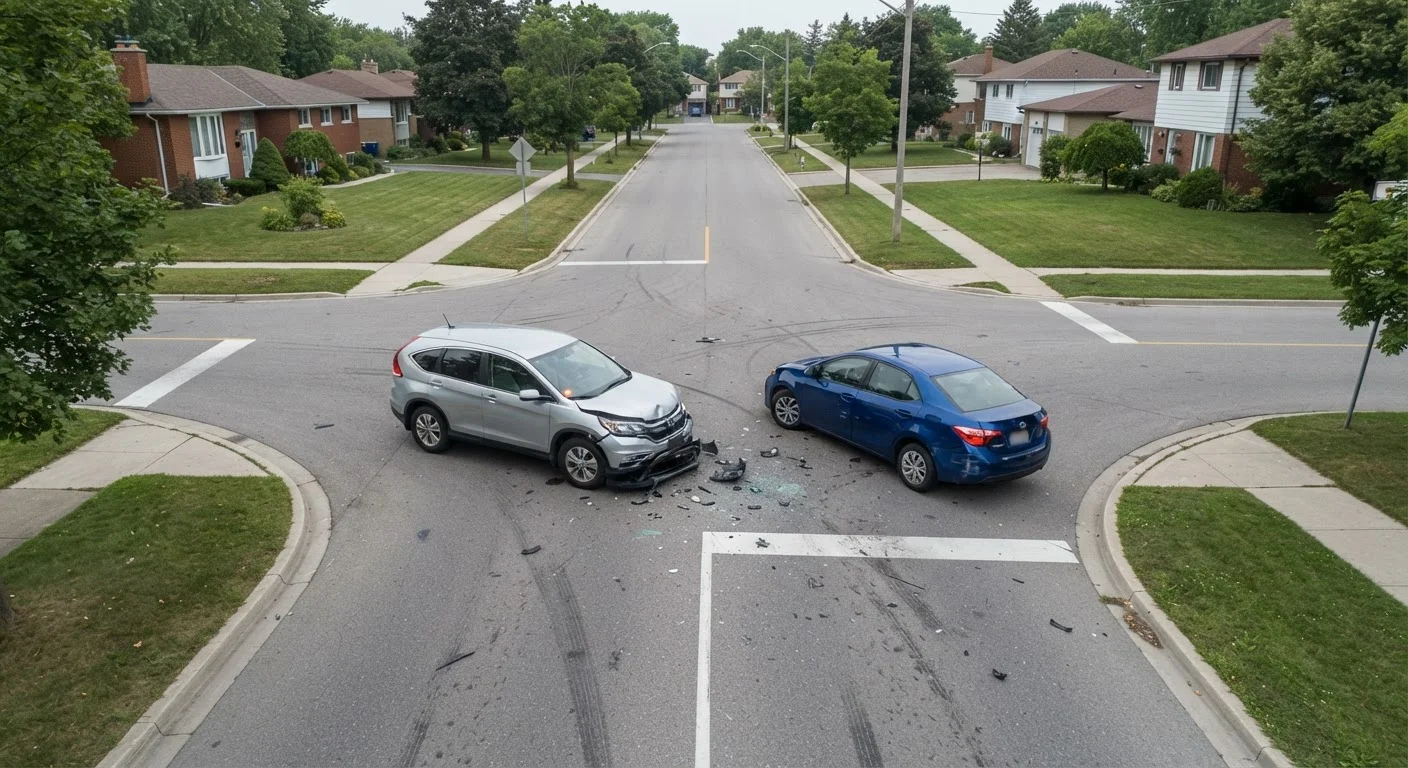
A serious accident involving injuries or multiple vehicles can generate medical bills and property damage well above typical state minimums. Once your policy limit is reached, you may be personally liable for the remaining costs.
No coverage for your own vehicle damage
State minimums cover damage you cause to others, not repairs to your own car. If you are at fault in a collision, or if a storm damages your vehicle, minimum coverage pays nothing toward your repairs.
No protection if the other driver is uninsured
Minimum policies rarely include uninsured or underinsured motorist coverage. If someone with no insurance hits you, you would need to pursue them personally for damages. Understanding uninsured and underinsured motorist coverage explains how those protections work.
State minimums vary and may feel lower than expected
What counts as 'minimum' depends entirely on your state. Minimum car insurance requirements by state breaks down what those numbers actually mean in practice.
Coverage does not follow you seamlessly across state lines
When you drive through states with higher minimums, your policy generally adjusts to meet the other state's floor, but the adjustment is typically narrow. Auto insurance coverage across state lines covers what most standard policies say about out-of-state travel.
The financial exposure is the central concern. Medical costs and vehicle repair bills after a multi-car accident can climb quickly past even a $50,000 or $100,000 policy limit. When that happens, the at-fault driver's personal savings, wages, or property can be targeted in a civil claim.
Drivers who have accumulated savings, own a home, or have other assets face more risk from inadequate liability limits than those who have little that could be claimed. If you own a home, liability coverage in homeowners insurance is a separate layer worth understanding, since those policies do not cover auto-related liability.
When to reconsider your limits
This article is general information
Nothing here is personalized insurance, financial, or legal advice. Coverage needs depend on your assets, driving history, vehicle value, and state laws. Policy terms, exclusions, and premiums vary by provider. Read your actual policy documents and talk with a licensed insurance agent to understand your specific options.
Life changes affect how well minimum coverage fits your situation. Buying a newer vehicle, gaining assets, or moving to a state with different minimums are all reasons to look at your policy again. A coverage review checklist can help you spot outdated limits or missing protections before your next renewal.
If your car is financed or leased, minimum coverage is not an option regardless. Lenders require collision and comprehensive as a condition of the loan. Lender-required auto coverage vs. personal choice walks through what that typically means in practice.
This article is for general informational purposes only and does not constitute personalized insurance, financial, or legal advice. Coverage terms, eligibility, and costs vary by provider and state. Consult a licensed insurance agent or adviser before making decisions about your own policy.