What lenders actually require
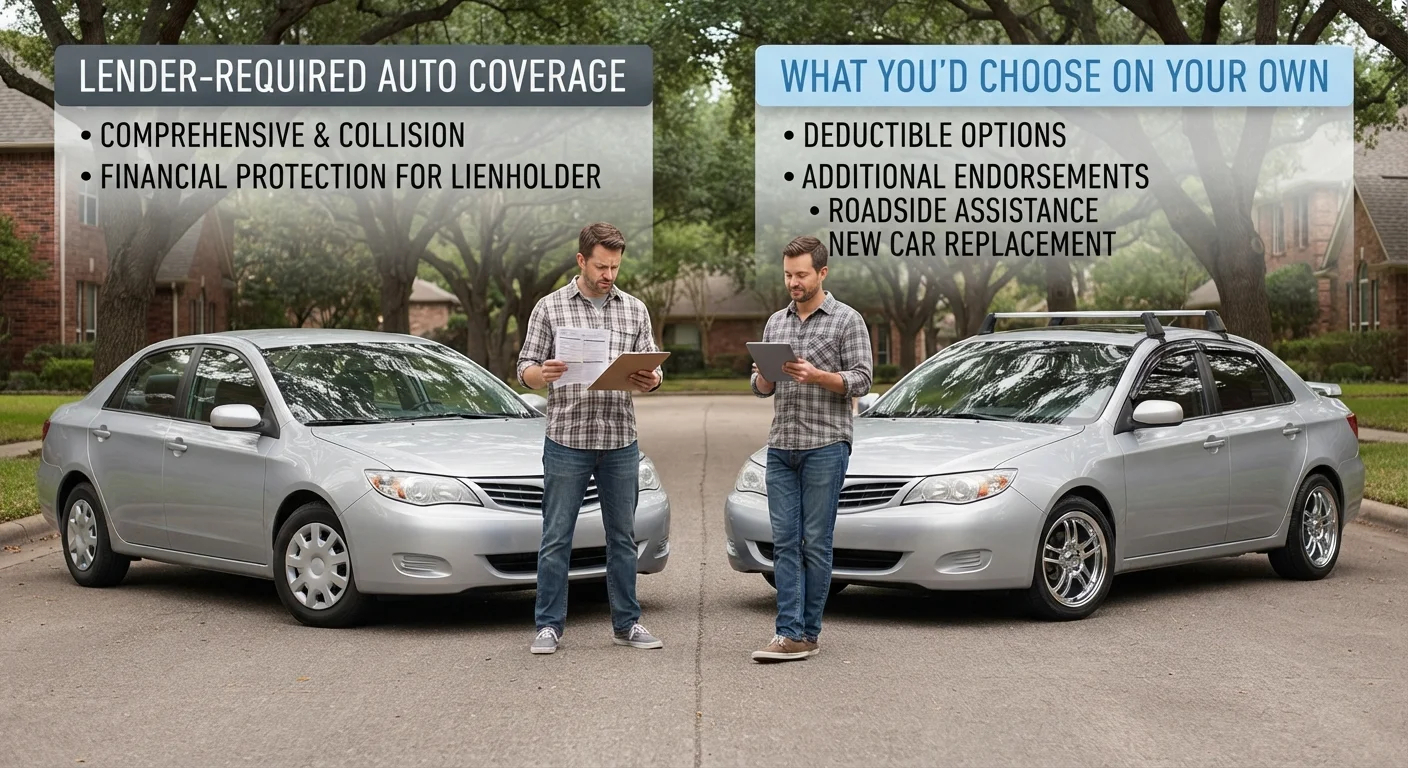
When you finance or lease a vehicle, the lender or leasing company has a financial stake in that car until the loan or lease ends. To protect that stake, they require you to carry two types of physical damage coverage that most states do not mandate by law.
- Collision coverage pays for damage to your car from an accident with another vehicle or object, regardless of fault.
- Comprehensive coverage pays for damage from events outside a collision, including theft, fire, hail, and flooding.
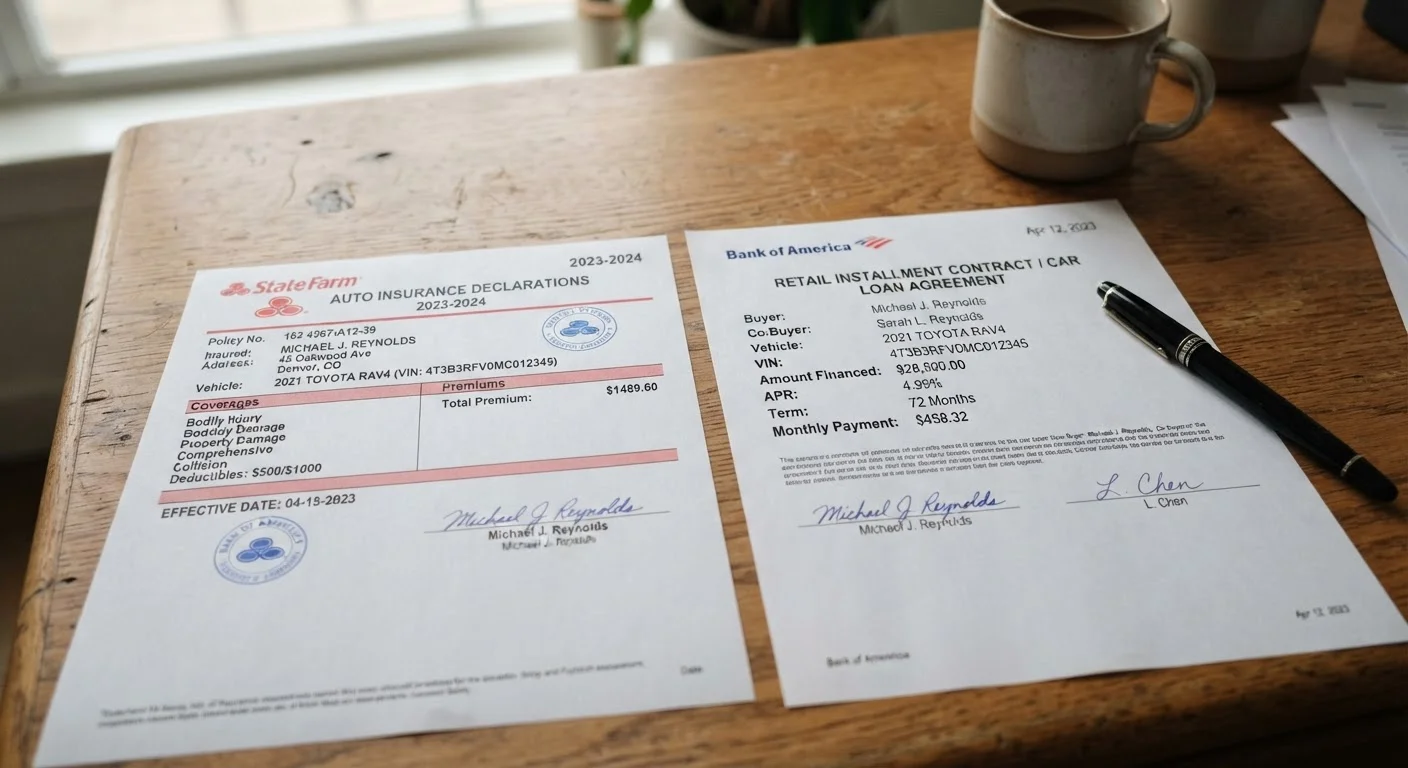
Beyond those two, lenders often set a maximum allowable deductible (commonly $500 or $1,000) so the payout in a claim is large enough to cover the remaining loan balance. They also require you to list them as a lienholder on the policy, which means the insurer notifies them if the policy lapses or is canceled.
Lease agreements typically go further. Many require higher liability limits than state minimums and may include gap-like protections built into the lease terms. Always read the financing or lease contract directly to see the exact requirements, since they vary by lender.
What you would likely choose without a lender
Drivers who own their vehicles outright are only required to meet their state's minimum liability coverage, which covers injury and property damage you cause to others. No state requires collision or comprehensive for owned vehicles.
Carrying only state-minimum coverage can lower your monthly premium, but it means any damage to your own car comes out of pocket. For a vehicle worth $3,000 or less, dropping physical damage coverage may be a reasonable financial decision. For a vehicle worth significantly more, the out-of-pocket risk may outweigh the premium savings.
Self-selected coverage also gives you full control over deductibles. Choosing a higher deductible lowers your premium, but you take on more cost at claim time. That trade-off is yours to make when no lender is involved.
Your liability limits are also fully your decision. State minimums are often low enough that a serious accident could exceed them, leaving you personally responsible for the difference. Many drivers choose limits above the state minimum regardless of whether they have a loan. See what goes into your car insurance rate for context on how these choices affect your premium.
GAP coverage: lender pressure vs. actual need
GAP (Guaranteed Asset Protection) coverage addresses the gap between what your insurer pays after a total loss and what you still owe on the loan. If your car is totaled and you owe $22,000 but the insurer values it at $18,000, GAP covers that $4,000 difference.
Lenders and dealers frequently offer GAP at the point of sale, sometimes rolling the cost into the loan itself. It is worth comparing that price against GAP coverage offered through an insurer, which is often less expensive. GAP is not required by law, and whether you need it depends on your down payment, loan term, and how quickly the vehicle depreciates relative to the loan balance.
Check your loan balance before renewing GAP
Pull your current loan payoff amount and compare it to your vehicle's estimated market value before each policy renewal. If the loan balance is now lower than the car's value, GAP coverage no longer closes a real gap. Dropping it at that point frees up premium dollars without reducing meaningful protection.
Once your loan balance falls below the vehicle's current market value, GAP coverage no longer provides meaningful protection. At that point, paying for it adds cost without adding benefit.
How the two sets of choices compare
| Coverage type | Lender-required | Self-selected (no loan) | |
|---|---|---|---|
| Collision coverage | Required | Optional | |
| Comprehensive coverage | Required | Optional | |
| Deductible limit | Often capped by lender | Your choice | |
| Liability limits | At least state minimum; lease may require more | At least state minimum; amount is your choice | |
| Lienholder listed on policy | Yes | No | |
| GAP coverage | Strongly encouraged at signing | Optional; compare prices before buying |
When a loan ends, nothing stops you from keeping the same coverage. Many drivers do, particularly if the vehicle still holds significant value. The auto insurance coverage review checklist can help you decide what to keep and what to drop once lender requirements no longer apply.
If you are new to buying coverage and want a broader foundation, Auto Insurance From Start to Finish walks through the full process in plain language.
This article is for general informational purposes only and is not personalized insurance, financial, or legal advice. Coverage terms, requirements, and costs vary by lender, insurer, and state. Read your loan or lease agreement and policy documents carefully, and consult a licensed insurance agent for guidance specific to your situation.