
How your policy behaves outside your home state
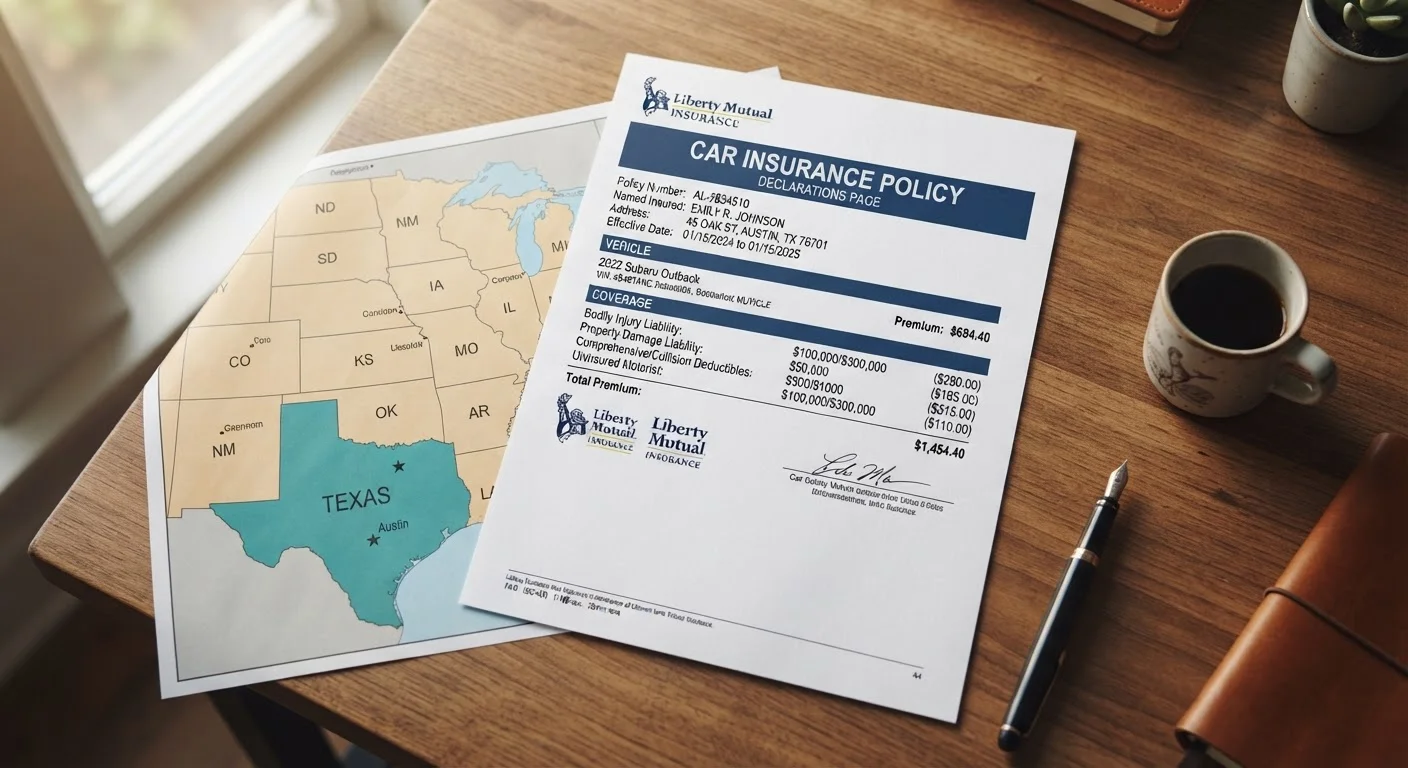
Most standard auto insurance policies in the U.S. follow the insured vehicle, not a fixed geography. That means the liability, collision, and comprehensive coverage you carry at home generally applies when you drive through another state. You do not need a separate policy for a road trip or a short-term stay elsewhere.
There is an important detail, though. Each state sets its own minimum coverage requirements, and those minimums vary. If you drive into a state whose legal minimums are higher than what your policy provides, most policies include a provision that automatically adjusts your liability limits to meet the state's floor for the duration of your time there. This adjustment is built into standard policy language and does not require you to call your insurer.
If you are new to auto insurance and want background on how policies are structured before reading further, see our first-timer's walkthrough.
When the rules change: longer stays and relocations
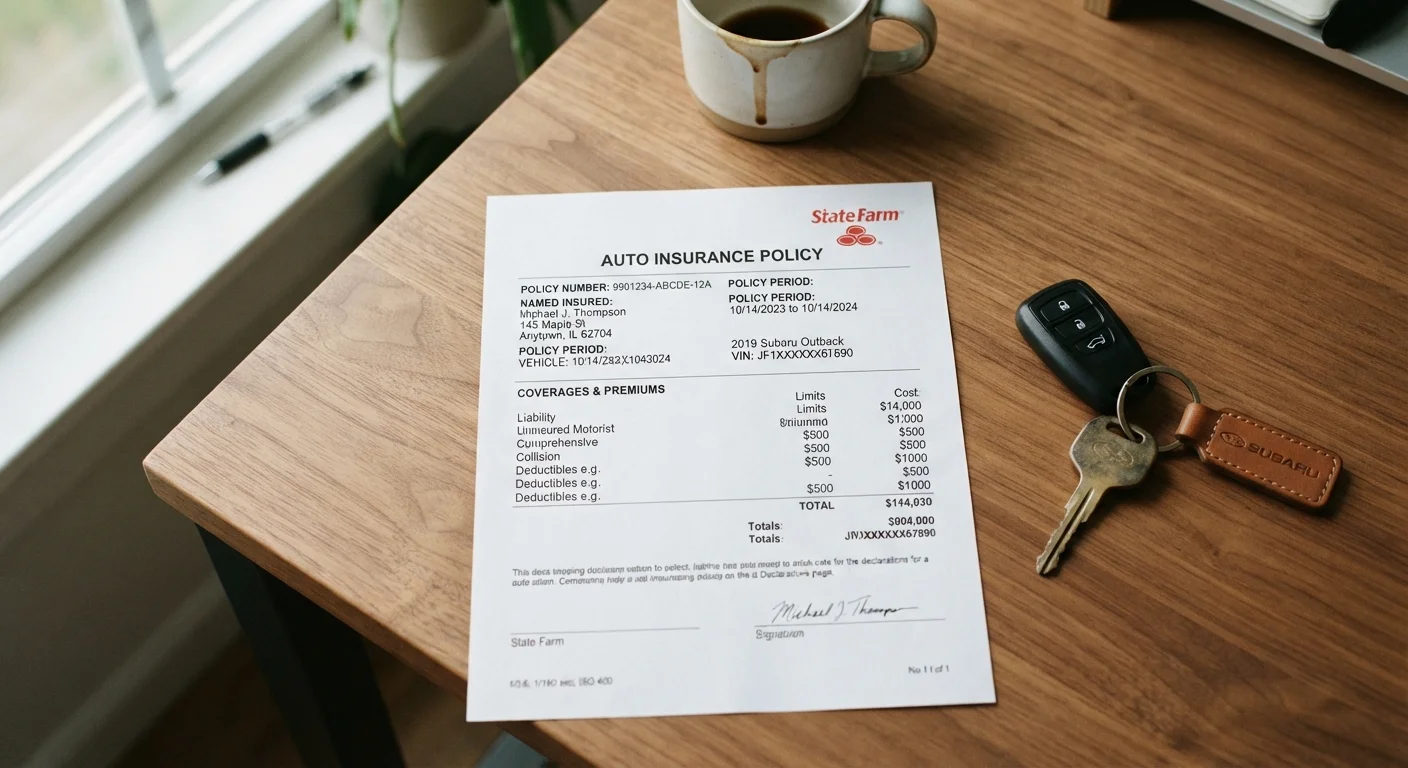
The automatic out-of-state adjustment is designed for travel, not relocation. If you move to another state, most insurers expect you to update your policy to reflect your new garaging address, typically within 30 to 90 days. Continuing to carry a policy registered in your former state while living elsewhere can create problems at claim time, since insurers may consider the policy inaccurately rated.
College students present a common version of this question. A student driving a parent's car to school in another state is usually covered under the parent's policy, but only up to a point. If the student establishes a permanent residence there or the car stays in that state most of the year, the insurer may require a policy update.
For a closer look at what the minimum coverage numbers actually mean state by state, see minimum required car insurance by state.
| Policy portability | Standard U.S. auto policies follow the vehicle across state lines |
| Minimum coverage adjustment | Most policies automatically match a higher state minimum when you enter that state |
| Relocation window | Insurers typically expect a policy update within 30 to 90 days of moving |
| No-fault states | 12 states use a no-fault system requiring personal injury protection (PIP) |
| Canada coverage | Most U.S. policies extend coverage into Canada; confirm with your insurer |
| Mexico coverage | U.S. auto insurance is not valid in Mexico; a separate Mexican policy is required |
No-fault states and what they mean for visitors
Twelve states use a no-fault insurance system, which requires drivers to carry personal injury protection (PIP) coverage and file injury claims with their own insurer regardless of who caused the accident. If you drive into a no-fault state without PIP on your policy, you may not meet that state's requirements.
Some policies include a provision that extends PIP or similar first-party medical coverage when the driver enters a no-fault state. Others do not. This is worth confirming with your insurer before traveling to states like Florida, Michigan, or New York, particularly if your current policy carries only liability coverage.
Carrying only the state minimum already involves trade-offs at home. Those trade-offs become more visible when crossing into states with different coverage structures. Our article on state-minimum coverage trade-offs covers this in more detail.
Canada, Mexico, and other countries
U.S. auto policies generally extend coverage into Canada under the same terms as domestic travel. The standard policy follows the vehicle, and most insurers treat Canada similarly to another U.S. state for coverage purposes, though it is worth confirming this directly with your insurer before crossing the border.
Mexico is a different situation. U.S. auto insurance is not recognized as valid coverage under Mexican law. If you drive into Mexico, you need a separate Mexican auto insurance policy. This applies even for short trips across the border. Driving without valid Mexican coverage can result in vehicle impoundment and legal liability.
Coverage questions that come up when traveling internationally often overlap with health and travel insurance concerns. Our overview of U.S. health insurance gaps when traveling abroad addresses the medical side of that picture.
This article is for general informational purposes only and is not personalized insurance or legal advice. Coverage terms, exclusions, and state regulations vary by insurer and policy. Read your actual policy documents and consult a licensed insurance agent for guidance specific to your situation.