How state minimums work
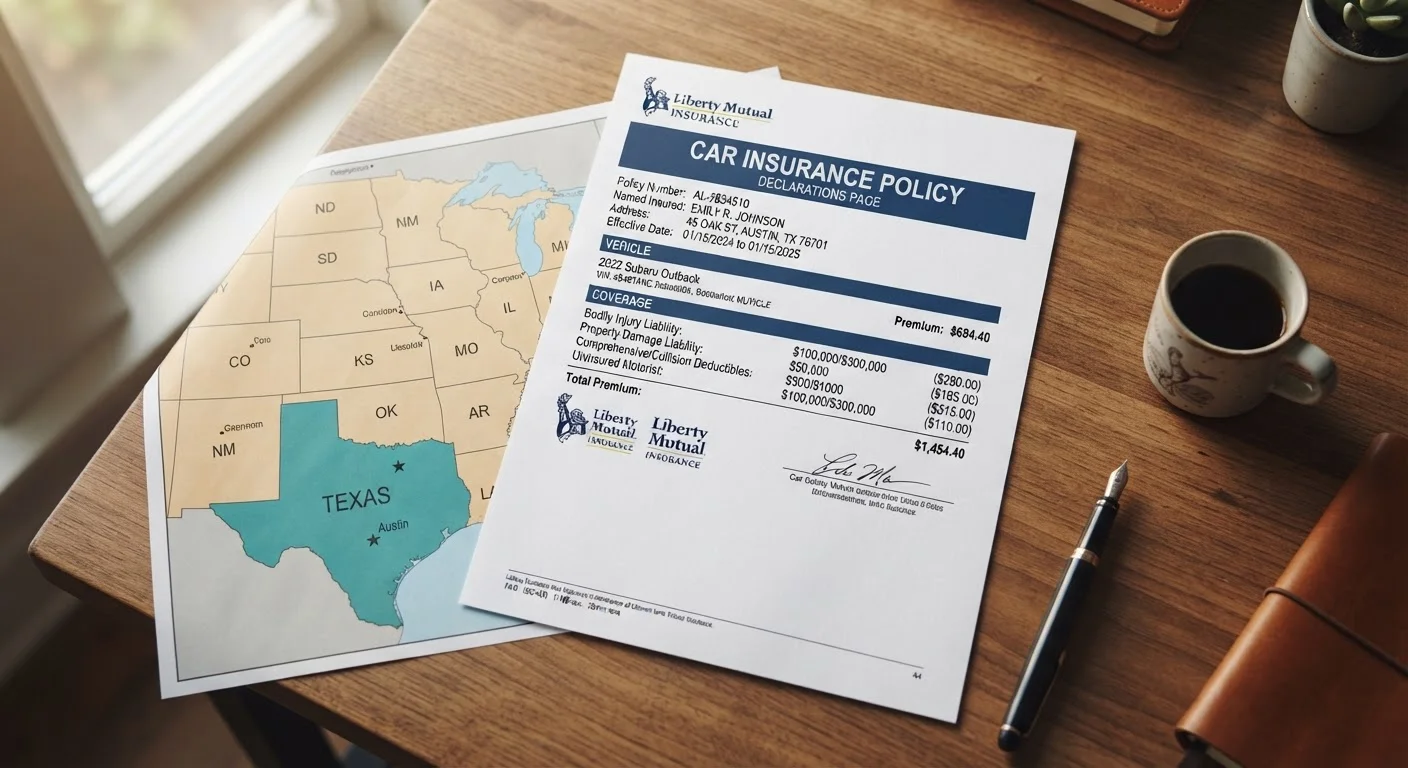
Each state sets its own rules for the minimum auto insurance drivers must carry. The result is that the legal floor for coverage varies considerably depending on where you are registered. If you move, buy a car in a new state, or drive regularly across state lines, the requirements that apply to you may change.
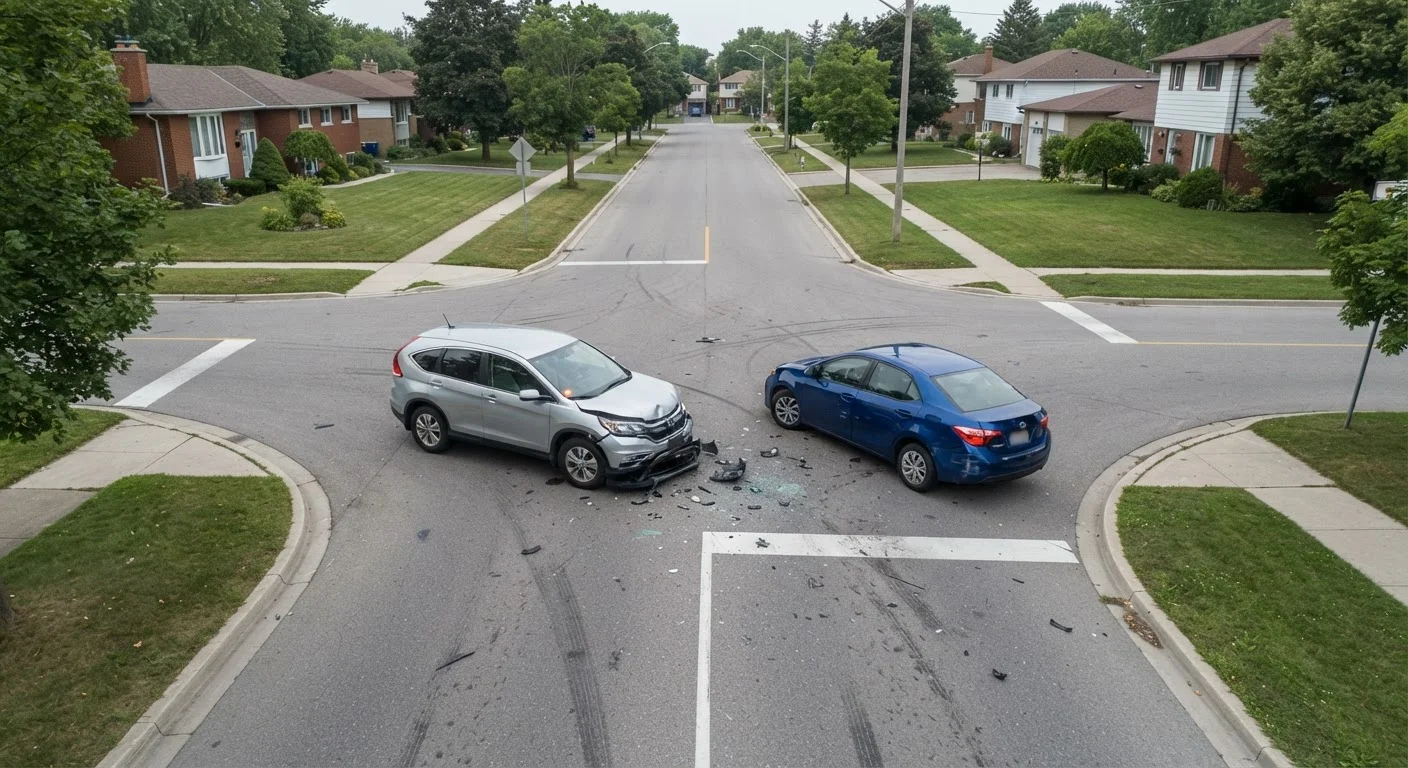
Most states require at least one form of liability insurance. Liability coverage pays for injuries or property damage you cause to someone else in an accident. It does not pay for your own medical bills or repairs to your vehicle. If you want coverage for your own car, that requires separate coverage types such as collision or comprehensive.
New Hampshire is the one exception to mandatory insurance laws: the state does not require drivers to carry insurance, but it does require proof of financial responsibility if you are involved in an accident. Virginia previously allowed a similar opt-out but changed its law in 2024, requiring coverage for all drivers.
This article is for general informational purposes only and is not legal or insurance advice. Coverage requirements vary by state and policy. Consult a licensed insurance agent or your state's motor vehicle authority for guidance specific to your situation.
Reading the numbers: what 25/50/25 actually means
Most state minimums are written as a set of three numbers. You will see formats like 25/50/25 or 15/30/5. These are split limits, and each number represents a different cap on what your insurer will pay.
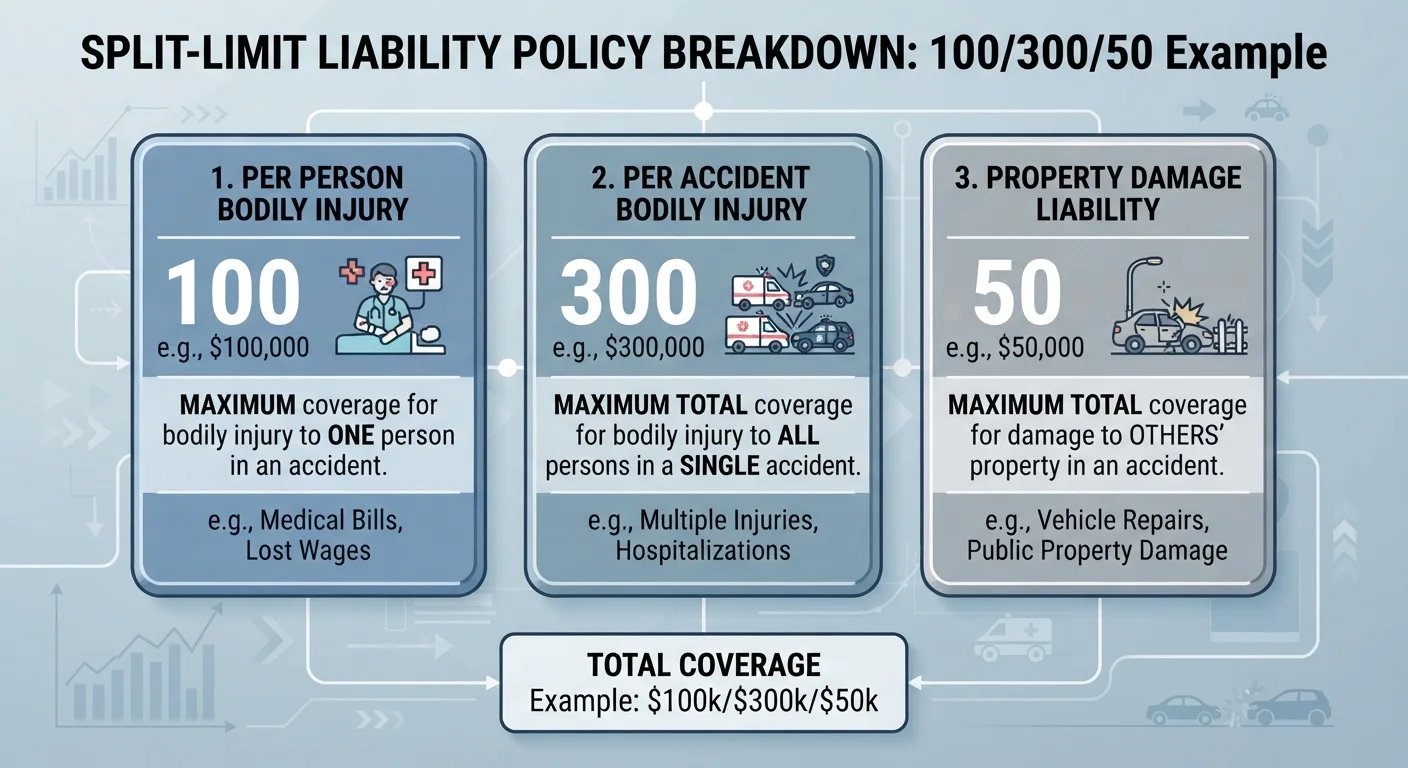
- The first number is the maximum payout per injured person in a single accident, in thousands of dollars. A limit of 25 means $25,000 per person.
- The second number is the maximum payout for all bodily injuries combined in one accident. A limit of 50 means $50,000 total, regardless of how many people are hurt.
- The third number is the maximum payout for property damage in one accident. A limit of 25 means $25,000 for the other party's vehicle or other damaged property.
If costs from an accident exceed any of these caps, the difference falls to you personally. A multi-vehicle collision or a serious injury can push expenses well past what a minimum-limit policy covers.
Some states use a combined single limit instead of three separate numbers. This format sets one total dollar amount for all liability claims from a single accident, with no per-person sub-limit.
Split limits vs. combined single limits
A few states allow drivers to satisfy liability requirements with a combined single limit (CSL) rather than split limits. A CSL of $60,000, for example, can be applied in any combination across bodily injury and property damage claims from one accident. This can be more flexible but is less common in personal auto policies than split-limit formats.
Coverage types states commonly require
Bodily injury liability and property damage liability appear in almost every state's minimum requirements. Beyond those two, states vary.
Personal injury protection (PIP) is required in no-fault states. PIP pays for your own medical expenses after an accident regardless of who caused it. States with PIP requirements include Florida, Michigan, New York, and several others. No-fault laws limit when you can sue another driver, so PIP fills the gap for your own injury costs.
Uninsured motorist coverage is mandatory in roughly half of all states. It covers your costs when the driver who hit you has no insurance. Some states also require underinsured motorist coverage for situations where the at-fault driver has insurance but not enough to cover your losses. For more on how these two work, see uninsured and underinsured motorist coverage explained.
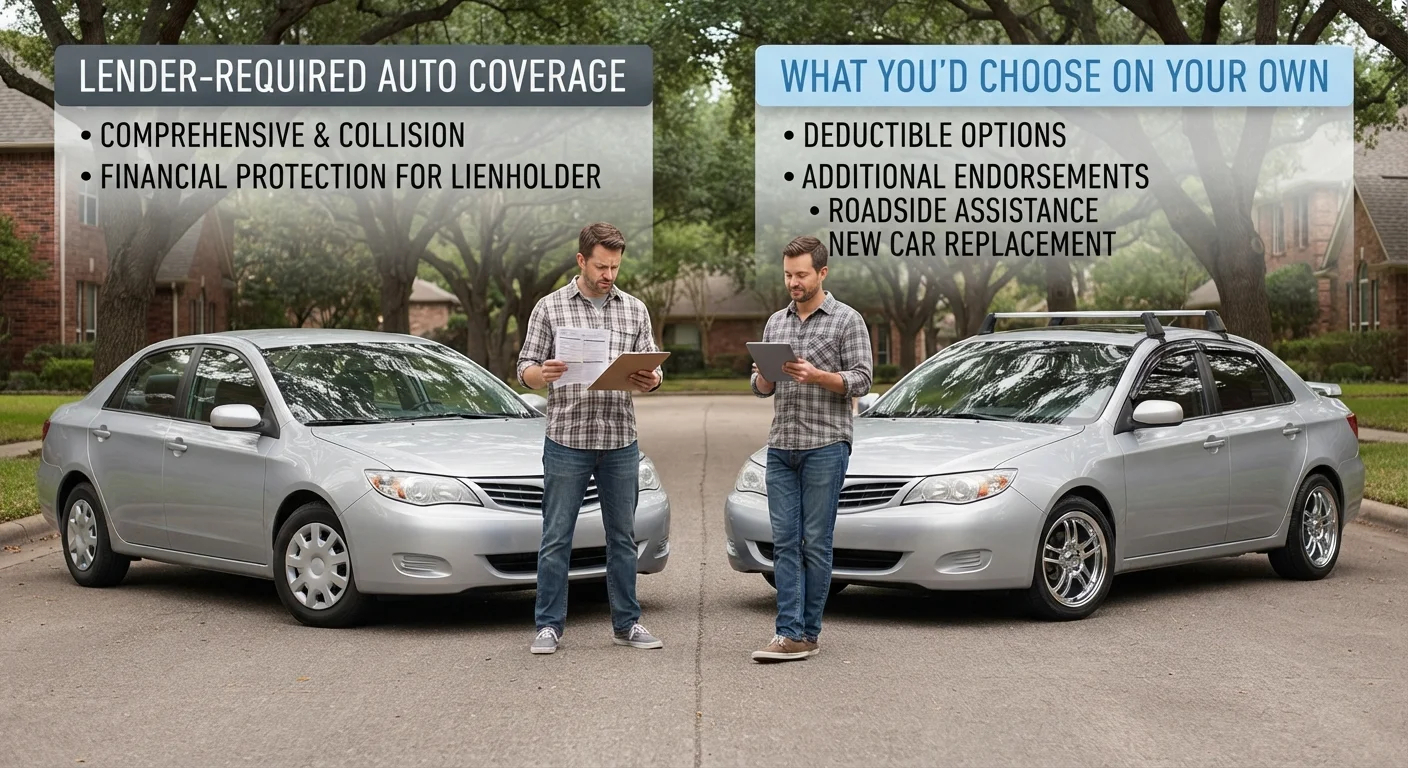
If you are financing or leasing your vehicle, your lender will almost certainly require collision and comprehensive coverage on top of whatever the state mandates. Lender-required coverage often goes well beyond the state minimum.
What minimum coverage leaves out
State minimums are designed to protect other people from harm you cause, not to protect you or your vehicle. That means a driver who carries only the legal minimum has no insurer-paid coverage for:
- Repairs to their own car after an at-fault accident
- Their own medical bills in states without PIP requirements
- Vehicle theft, vandalism, or weather damage
- Accidents caused by an uninsured driver (unless that state requires uninsured motorist coverage)
Whether the minimum is enough depends on your financial situation, the age and value of your vehicle, and your tolerance for out-of-pocket risk. Carrying only state-minimum coverage has real trade-offs worth thinking through before you decide.
For drivers new to buying insurance, a first-timer's walkthrough of auto insurance covers the broader process from start to finish. And if you want to understand what factors shape your premium beyond the coverage type you choose, what goes into your car insurance rate explains what insurers consider when setting your price.