
Why a coverage review matters before renewal
Auto insurance renews automatically for most people, which makes it easy to carry the same coverage year after year without checking whether it still fits. But your situation changes: you pay off a loan, move to a different state, add a driver, or buy a newer car. Any of those shifts can mean you are either underinsured or paying for protections you no longer need.
This checklist walks through the specific things worth checking before your next renewal. It is general information, not personalized advice. For guidance on your own policy, speak with a licensed insurance agent who can review your situation directly.
If you do an annual financial review, pairing it with this checklist makes sense. See the annual financial self-audit checklist for a broader framework.
What to gather before you start
Having the right documents in front of you keeps the review focused.
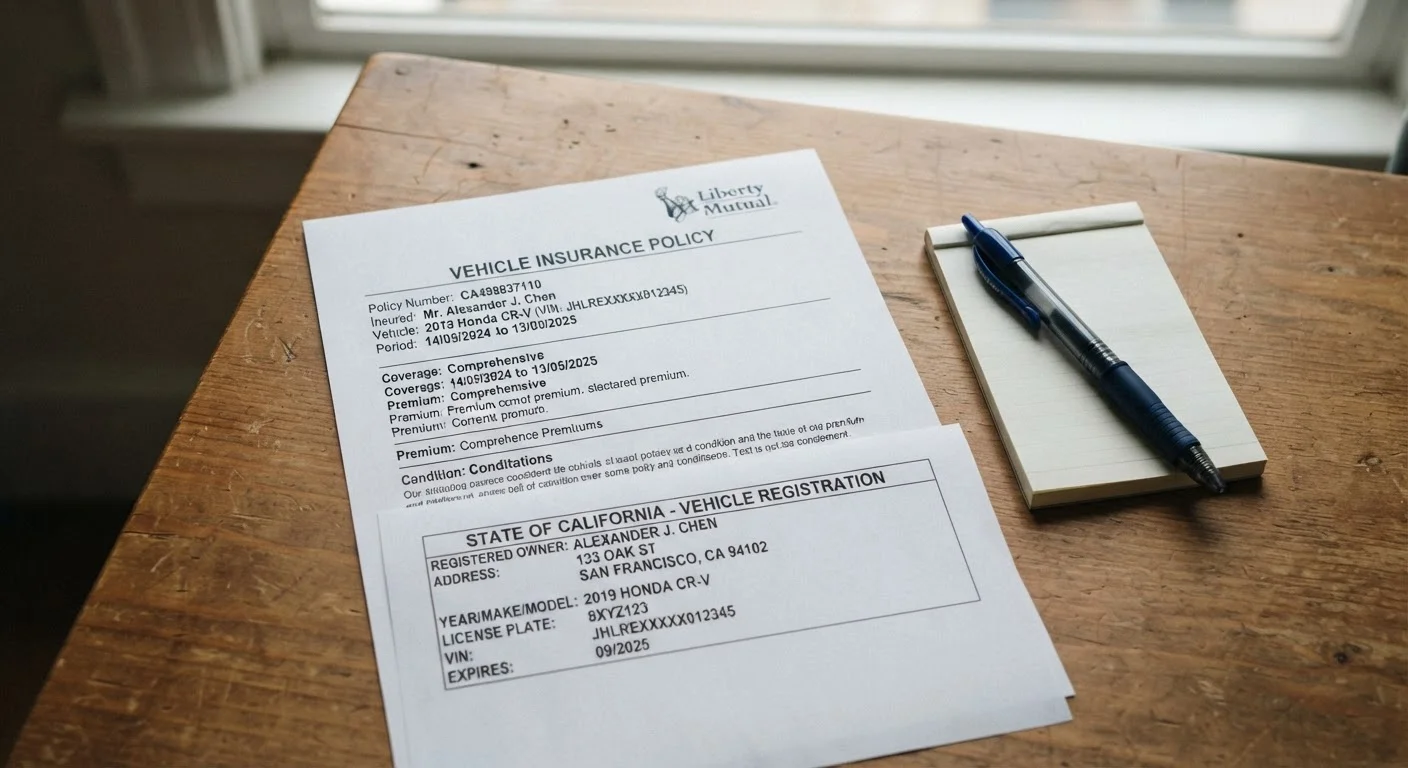
Declarations page
Lists your current coverage types, limits, deductibles, and premium; your starting point for the review.
Vehicle registration
Confirms the VIN and vehicle details match what your insurer has on file.
Loan or lease paperwork
Shows any lender-required coverage minimums you must maintain while financing or leasing.
State insurance department website
Lets you verify your state's current minimum coverage requirements.
Auto club or roadside membership card
Helps identify any duplicate coverage between that membership and your policy's add-ons.
The coverage review checklist
Work through each group below. Flag anything that looks outdated or unclear so you have specific questions ready when you contact your insurer or agent.
Your current policy documents
Liability limits
Comprehensive and collision coverage
Uninsured and underinsured motorist coverage
Add-ons and optional coverages
Life changes that affect coverage
State minimums are not full protection
Every state sets minimum liability limits, but those floors were designed to allow legal driving, not to protect your assets fully. If you cause an accident that results in serious injuries or significant property damage, minimum limits can be exhausted quickly, and you may be personally responsible for the remainder. Review your limits against what you own, not just against the legal minimum.
Gaps can appear after life changes
Insurers do not automatically adjust your coverage when your life changes. Adding a vehicle, moving to a new state, or having a teen start driving without updating the policy can create gaps or even give the insurer grounds to dispute a claim. Report changes promptly and confirm them in writing. For a broader look at how coverage gaps appear across insurance types, see common health insurance coverage gaps for a parallel example from another vertical.
After the checklist: what to do with what you found
If you spotted gaps, call your insurer or a licensed independent agent before your renewal date. Changes made mid-term are possible in most states, though they may affect your premium immediately.
If you found duplicate coverage, ask your insurer to remove the overlapping add-on in writing and confirm the adjusted premium.
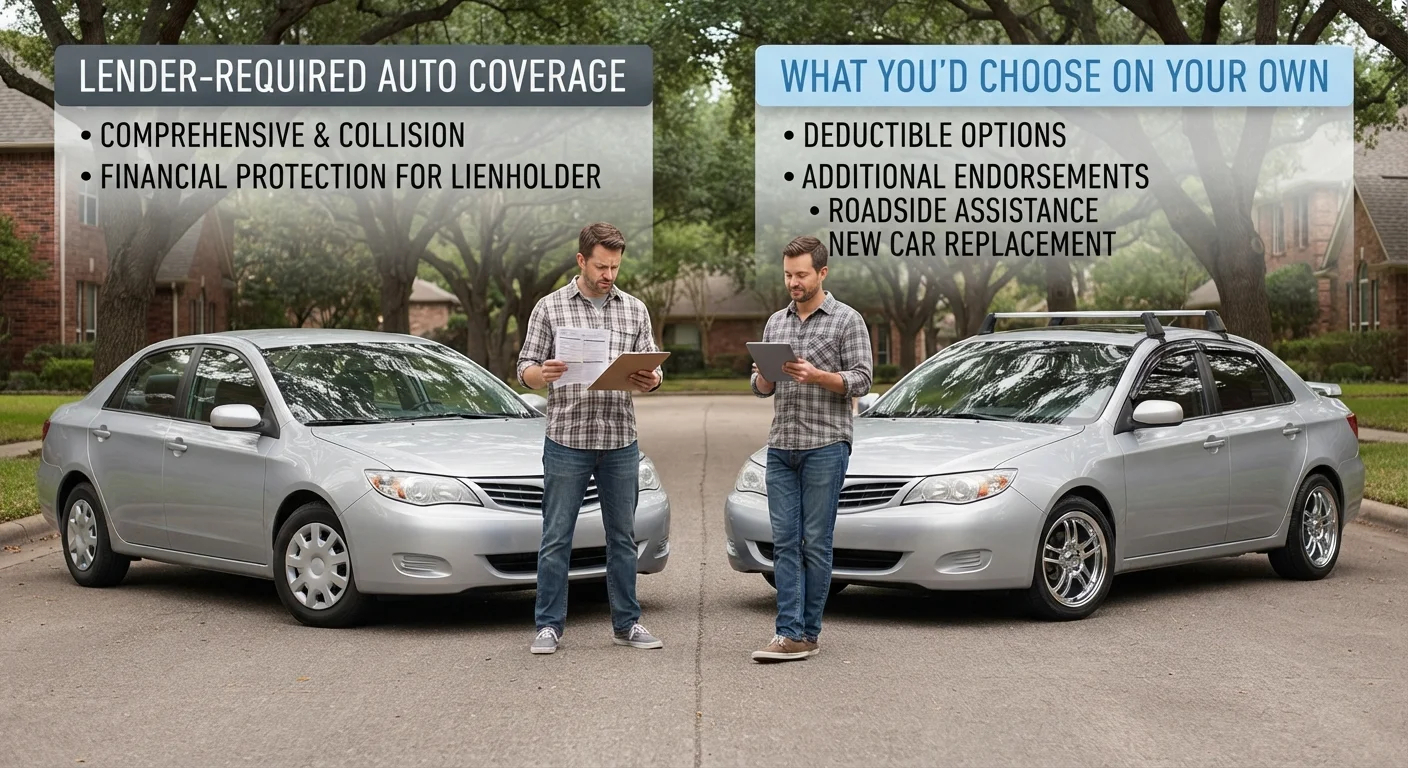
Drivers who finance or lease should also compare what their lender requires against what they would choose on their own. The guide to lender-required coverage vs. personal choice explains where those requirements typically differ.
If you drive across state lines regularly or plan an extended trip, check how your policy handles out-of-state travel. Coverage across state lines explains what most standard policies say about that situation.
This article is for general informational purposes only and is not personalized insurance, financial, or legal advice. Coverage terms, limits, exclusions, and regulations vary by provider and state. Read your actual policy documents and consult a licensed insurance agent for guidance on your specific circumstances.