
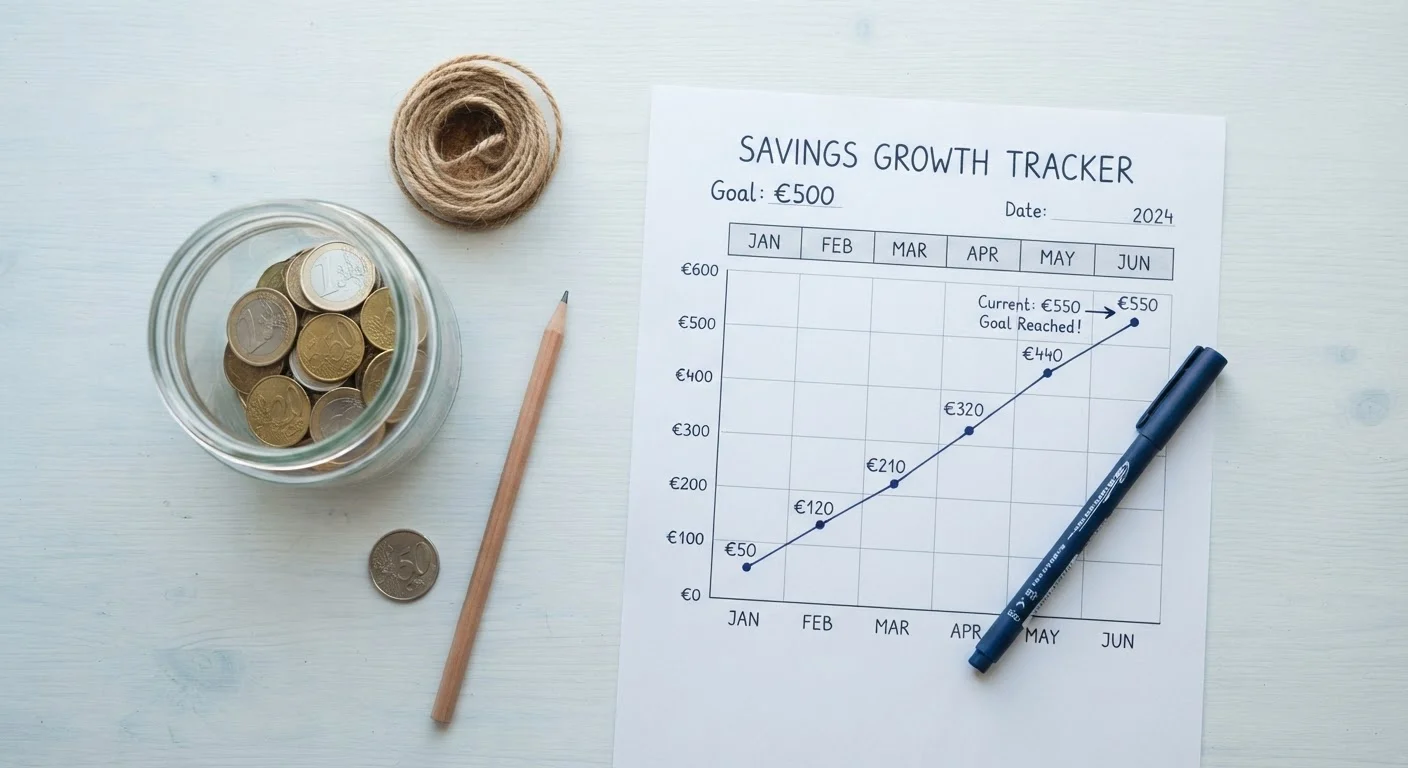
What separates saving from investing
Both saving and investing involve setting money aside, but the mechanics and the risks differ in ways that matter. Saving means putting money in a stable, low-risk account where the balance does not fluctuate. A high-yield savings account or a certificate of deposit (CD) will not lose principal, and the funds are accessible when you need them. The tradeoff is that returns are modest, generally tied to prevailing interest rates.
Investing means putting money into assets, such as stocks, bonds, or funds, whose value can rise or fall. Over long periods, diversified investment portfolios have historically grown faster than savings accounts, though past performance does not guarantee future results and there is always a risk of loss. The longer the time horizon, the more time there is to recover from a market dip.
If you are just starting your financial plan, understanding this distinction is one of the first useful steps you can take.
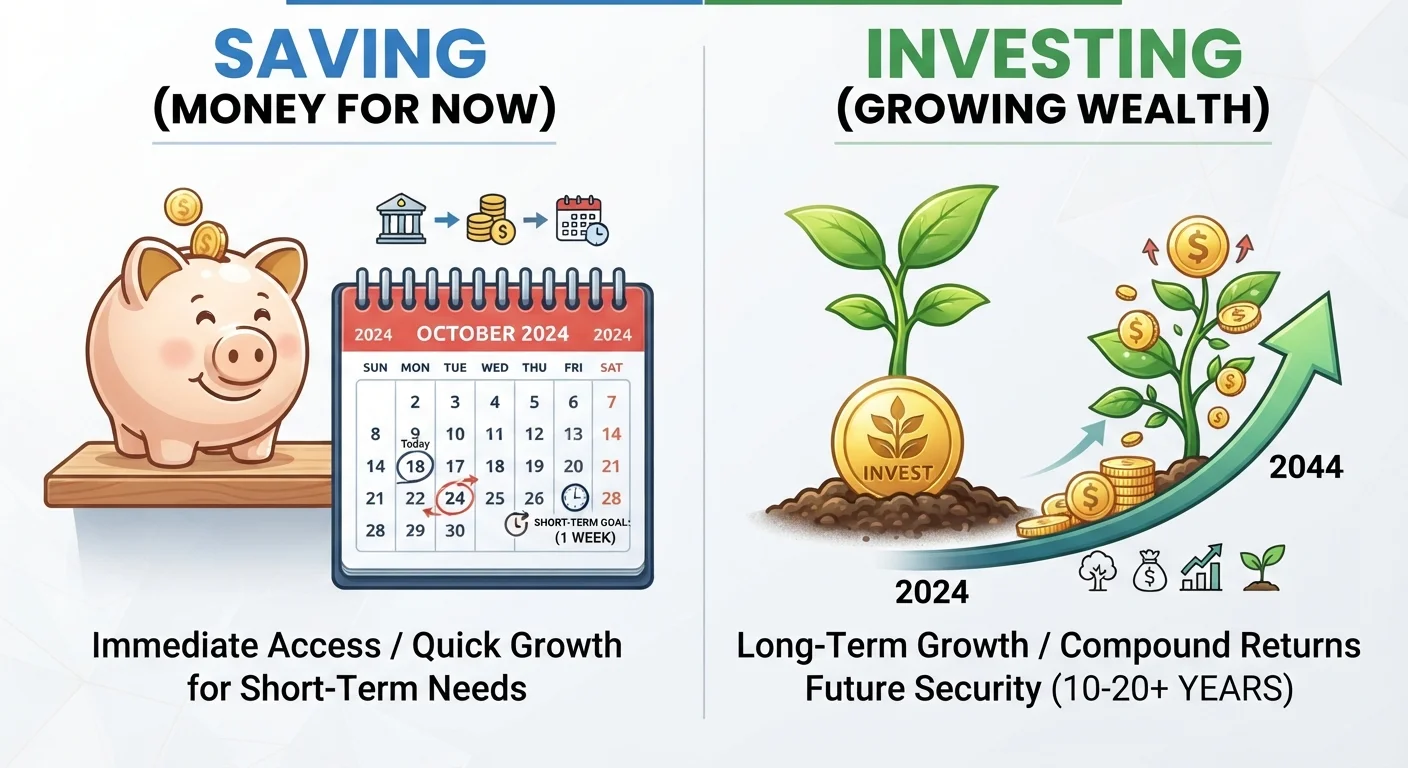
Matching the tool to the timeline
The most reliable way to decide between saving and investing is to look at when you need the money.
- Goals within one to two years: keep funds in a savings account or money market account. The balance needs to be there, intact, when the date arrives.
- Goals two to five years out: a mix of stable savings and conservative, low-volatility instruments may work, but the closer the deadline, the more you should weight stability over growth.
- Goals 10 or more years away: a diversified investment account gives your money time to grow and time to recover from short-term market swings.
A down payment on a home, a planned medical expense, or a vacation fund all belong in savings because the timeline is fixed and the consequences of a market drop are immediate. Retirement savings or a college fund for a young child belong in investment accounts because time is an asset.
| Short-term savings | Long-term investing | |
|---|---|---|
| Typical timeline | Under 5 years | 10 or more years |
| Account types | High-yield savings, CDs, money market | Brokerage, IRA, 401(k) |
| Risk of loss | Very low (FDIC-insured accounts) | Moderate to high depending on assets |
| Growth potential | Low, tied to interest rates | Higher, tied to market performance |
| Liquidity | High, funds accessible quickly | Lower, early withdrawal may carry penalties |
| Best for | Emergency fund, vacation, down payment | Retirement, education, wealth building |
The cost of mixing up the two approaches
Using an investment account for a short-term goal is one of the most common early mistakes in personal finance. If the market drops 20 percent the month before you need the funds, you either take the loss or delay the goal. Neither outcome was planned for.
Going the other direction, keeping retirement money in a low-interest savings account for decades, is also costly. The gap between a 0.5 percent savings rate and a historically average market return compounds significantly over 20 or 30 years. That gap represents real purchasing power in retirement.
Starting retirement savings later in life is manageable, but the longer savings sit in the wrong type of account, the harder it becomes to close the gap.
This article is general financial information and education. It is not personalized financial, investment, or tax advice. For decisions specific to your situation, consult a licensed financial adviser or other qualified professional.
Running both strategies at once
For most adults, the question is not which approach to use but how to divide resources between the two. A common starting point is building a liquid emergency fund (typically three to six months of essential expenses in a savings account) before directing extra dollars toward long-term investments. Without that cushion, an unexpected expense can force you to liquidate investments at the wrong time.
Once a basic emergency fund exists, contributing regularly to a retirement account while continuing to save for near-term goals is a reasonable structure. Automating separate transfers to a savings account and an investment account on each payday reduces the friction of splitting money between goals manually.
Families thinking further ahead, including planning for long-term care or estate needs, may find the same logic applies: understanding care financing options early gives more time to build the right mix of liquid and invested assets.