

Why starting late is not the same as starting too late
Many Americans reach their 40s or 50s without a substantial retirement account. Life gets in the way: student loans, raising children, medical costs, job changes. The concern is legitimate, but the assumption that "it's too late to matter" is not accurate.
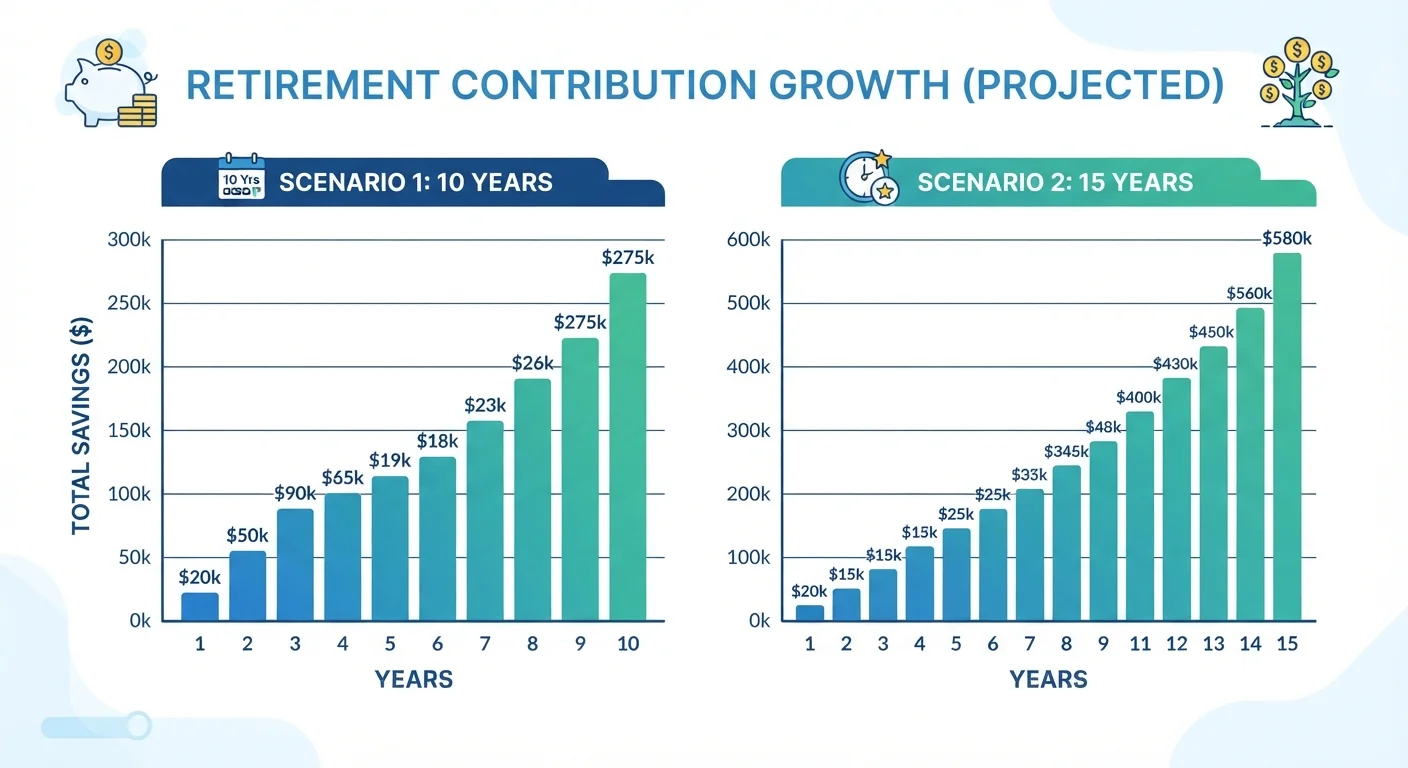
A 50-year-old who begins saving aggressively still has roughly 15 years before a traditional retirement age of 65. Fifteen years of consistent, maximized contributions, combined with market growth and Social Security income, can build a meaningful financial floor. It is not the same position as starting at 25, but it produces real results.
If you are still working through the basics of budgeting and goal-setting, Starting Your Financial Plan from Scratch covers how to organize your finances before focusing on retirement accounts specifically.
The numbers: contribution limits and catch-up rules
The IRS sets annual limits on how much you can put into tax-advantaged retirement accounts. For 2024, workers under 50 can contribute up to $23,000 to a 401(k). Once you turn 50, you can add a catch-up contribution of $7,500, bringing your total to $30,500 per year. For IRAs, the standard limit is $7,000, with a $1,000 catch-up allowance for those 50 and older.
If your employer offers a 401(k) match, contribute at least enough to capture the full match before directing money elsewhere. That match is part of your compensation, and not using it means leaving earned income on the table.
$30,500
Annual 401(k) limit for workers 50 and older
Per IRS 2024 limits, including the $7,500 catch-up contribution available to those aged 50 and above.
~8%
Annual Social Security benefit increase per delay year
For each year you delay claiming past full retirement age, up to age 70, the Social Security Administration increases your monthly benefit by approximately 8 percent.
15 years
Savings window from age 50 to traditional retirement
A worker who begins saving at 50 and retires at 65 has a 15-year compounding window, enough to build a meaningful balance with consistent, maximized contributions.
Roth accounts (Roth IRA, Roth 401(k)) have different tax treatment: contributions go in after tax, and qualified withdrawals in retirement are tax-free. For some late starters who expect to be in a lower tax bracket now than in retirement, a Roth structure can work in their favor. For others, a traditional pre-tax account reduces taxable income today. A licensed financial adviser or CPA can help you weigh which structure fits your situation.
Social Security as part of the picture
Personal savings are one piece. Social Security is another. For late starters, understanding how to maximize that benefit matters more than it might for someone with a large 401(k) balance.
You can claim Social Security as early as age 62, but doing so permanently reduces your monthly benefit. If you wait until your full retirement age (66 or 67, depending on birth year), you receive your full calculated benefit. Wait longer, and your benefit grows by approximately 8 percent for each year you delay, up to age 70.
For someone with a smaller personal savings balance, delaying Social Security by even two or three years can close a meaningful income gap in retirement. The Social Security Administration's online tools let you estimate your benefit at different claiming ages based on your actual earnings record.
Common misconceptions about Social Security benefits are worth understanding before you decide when to claim, particularly around how working in retirement affects your benefit amount.
Clearing debt alongside saving
High-interest debt, particularly credit card balances carrying 20 percent or more in annual interest, works against retirement savings. Paying $500 a month toward a 22 percent APR balance saves more in guaranteed interest charges than most investments return in an average year.
The practical approach for most late starters is to do both simultaneously: direct enough to your 401(k) to capture any employer match, then attack high-interest debt aggressively. Once that debt is gone, redirect those payments into retirement contributions.
Overspending patterns that create ongoing debt are worth identifying early. Signs you may be living beyond your means walks through the specific financial patterns that quietly erode savings capacity and what adjustments can help.
Automating contributions once your cash flow is stable reduces the friction of consistent saving. Automating your finances explains how to set up transfers that work in the background without requiring monthly decisions.
This article is for general informational purposes only and does not constitute personalized financial, tax, or investment advice. Retirement planning involves individual factors including income, expenses, health, and risk tolerance. Consult a licensed financial adviser, accountant, or other qualified professional before making decisions about your own retirement strategy.