

Two separate types of ACA financial assistance
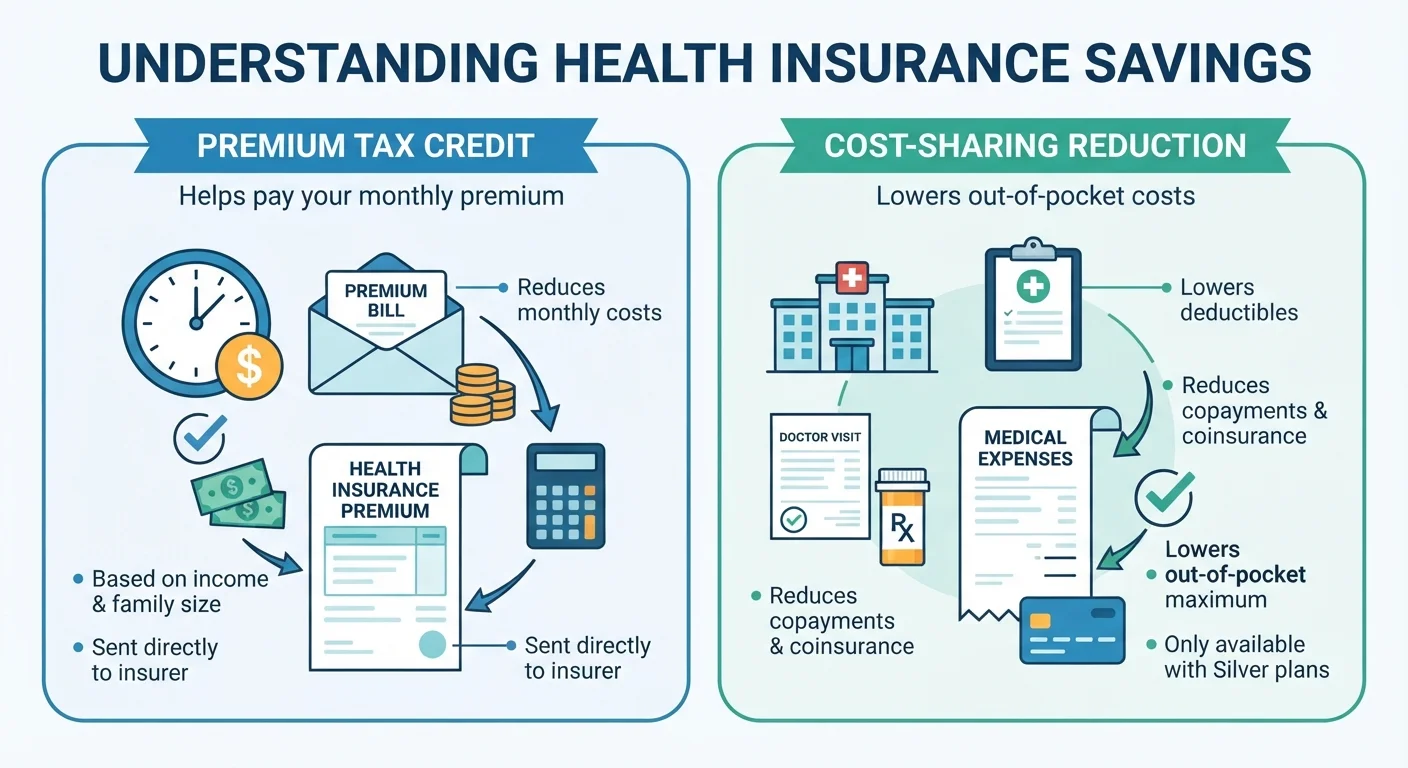
When people talk about ACA subsidies, they often mean two distinct programs that work differently and benefit different situations. A premium tax credit (PTC) reduces how much you pay each month just to keep your plan active. A cost-sharing reduction (CSR) reduces what you pay when you actually receive care. Understanding the difference matters because qualifying for one does not automatically mean you will receive the full benefit of the other.
Both programs are available only through the Health Insurance Marketplace, the system created by the Affordable Care Act for individuals and families who buy their own coverage. If you are new to comparing health plans, a plain-language overview of insurance basics can help you get oriented before examining specific cost details.
How premium tax credits work
A premium tax credit is calculated based on your projected household income for the year, measured against the federal poverty level (FPL). The credit is designed so that your premium for a benchmark Silver plan does not exceed a set percentage of your income. If the full premium costs more than that percentage, the government covers the difference.
You can apply the credit in two ways. Most people choose to have it paid directly to their insurer each month, which lowers what you owe on your monthly bill. Alternatively, you can pay the full premium yourself during the year and claim the credit when you file your federal taxes. The monthly approach is more common because it spreads the benefit throughout the year.
Because the credit is based on estimated income, a gap can open if your actual earnings differ from what you projected. If you earn more than expected, you may need to repay part of the credit. If you earn less, you may receive additional credit on your tax return. The Marketplace allows you to report income changes during the year, which can help keep the estimate accurate.
Report income changes during the year
If your income changes after you enroll, update your Marketplace application as soon as possible. Adjusting your projected income mid-year changes your monthly tax credit amount and reduces the chance of a large repayment or unexpected credit at tax time. Life changes such as a new job, job loss, or change in household size can all affect your eligibility.
How cost-sharing reductions work
Cost-sharing is the portion of medical costs you pay directly, including your deductible (the amount you pay before insurance begins covering most services), copays (fixed amounts per visit or prescription), and coinsurance (a percentage of costs you share with the insurer after the deductible). For more detail on how these interact, see our article on how deductibles, copays, and coinsurance shape what you pay.
Cost-sharing reductions lower these amounts for people whose income falls below 250% of the federal poverty level. The reduction is applied by the insurer, not as a separate payment. It shows up as a lower deductible, reduced copays, and a lower out-of-pocket maximum than the standard version of the same plan.
CSRs attach only to Silver-tier plans. The Marketplace organizes plans into four metal tiers: Bronze, Silver, Gold, and Platinum. If you qualify for a CSR and enroll in a Silver plan, your plan operates more like a Gold or Platinum plan in terms of cost-sharing, depending on your income level, while your premium may still be reduced by a tax credit. Choosing a different metal tier when you qualify for a CSR means forfeiting the out-of-pocket benefit.
Silver plans and cost-sharing reductions
The connection between Silver plans and CSRs is a structural feature of the ACA, not a coincidence. If you qualify for a CSR, your Silver plan is modified at the insurer level to reflect lower cost-sharing amounts. The Marketplace will show you these adjusted plan details during enrollment, so you can compare the actual numbers before choosing a tier.
What this means when comparing plans
People who qualify for CSRs often find that a Silver plan offers lower overall costs than a Bronze plan, even though Bronze plans carry lower listed premiums. A Bronze plan has a high deductible, so you may pay substantially more out of pocket before coverage begins. A CSR-enhanced Silver plan can have a deductible that is hundreds or thousands of dollars lower, which changes the math for anyone who expects to use medical services.
Job-based coverage follows different rules entirely. If your employer offers coverage considered affordable under ACA standards, you generally will not qualify for a Marketplace premium tax credit, regardless of what that employer plan costs you. Our comparison of employer-sponsored coverage versus individual Marketplace plans explains how these eligibility rules interact.
Short-term plans and other non-ACA-compliant products are not eligible for either type of assistance. If you are weighing those options, a comparison of short-term plans and ACA plans outlines the coverage differences that accompany the cost differences.
This article is for general informational purposes only and is not legal, financial, or medical advice. Eligibility for ACA subsidies depends on your individual circumstances. Consult a licensed health insurance agent, a certified enrollment navigator, or a qualified financial professional for guidance specific to your situation.