
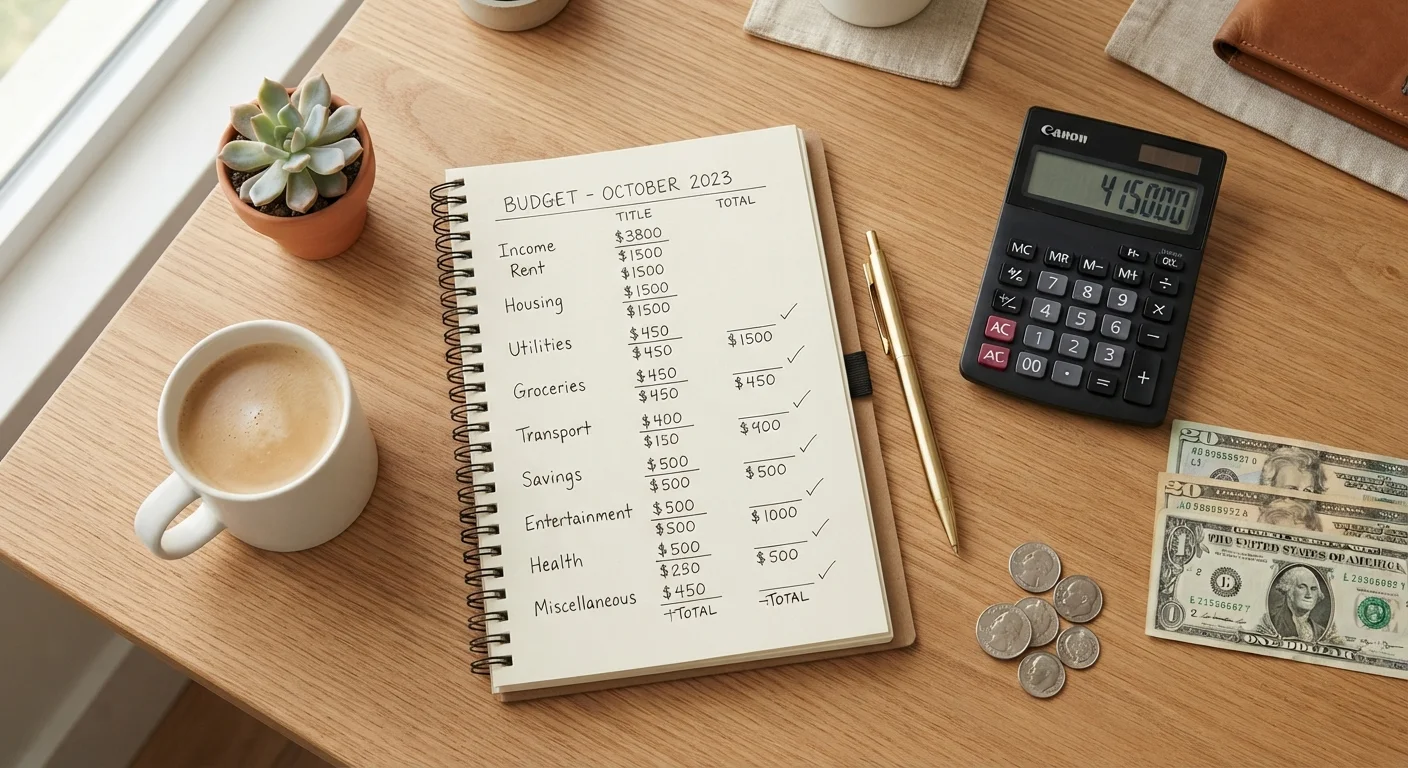
What a personal budget actually is
People sometimes treat "budget" as a word that means cutting back or going without. That is not what a budget is. A budget is a document, in whatever form works for you, that shows two things: how much money comes in and how much money goes out. When those two numbers match up, you have a complete picture of your monthly financial life.
Income in a budget includes wages, salaries, freelance pay, Social Security payments, pension distributions, rental income, or any other regular source of money. Expenses include everything you pay for: rent or mortgage, utilities, groceries, insurance premiums, loan payments, subscriptions, and discretionary items like dining out or entertainment. For a fuller look at how a budget fits into broader money management, see Starting Your Financial Plan from Scratch.
Fixed versus variable expenses
One of the most practical things a budget does is separate expenses into two groups. Fixed expenses are amounts that stay the same from month to month: a mortgage payment, a car loan, a fixed-rate insurance premium. Variable expenses change: groceries, gas, clothing, and entertainment all shift depending on the month.
This distinction matters because variable expenses are where most adjustments happen. A fixed car payment cannot be changed without refinancing or selling the vehicle. A grocery bill can often be trimmed. When a budget shows that spending exceeds income, it is usually variable categories that offer the most immediate room to change. If you notice your spending has been creeping upward without a clear reason, Signs You May Be Living Beyond Your Means walks through patterns worth reviewing.
Track one month before setting targets
If you have never budgeted before, record actual spending for a full month without trying to change anything. That real-world data gives you a more accurate starting point than estimates alone. Trying to set targets before you know your baseline often leads to categories that are too optimistic to stick with.
How to build a simple budget
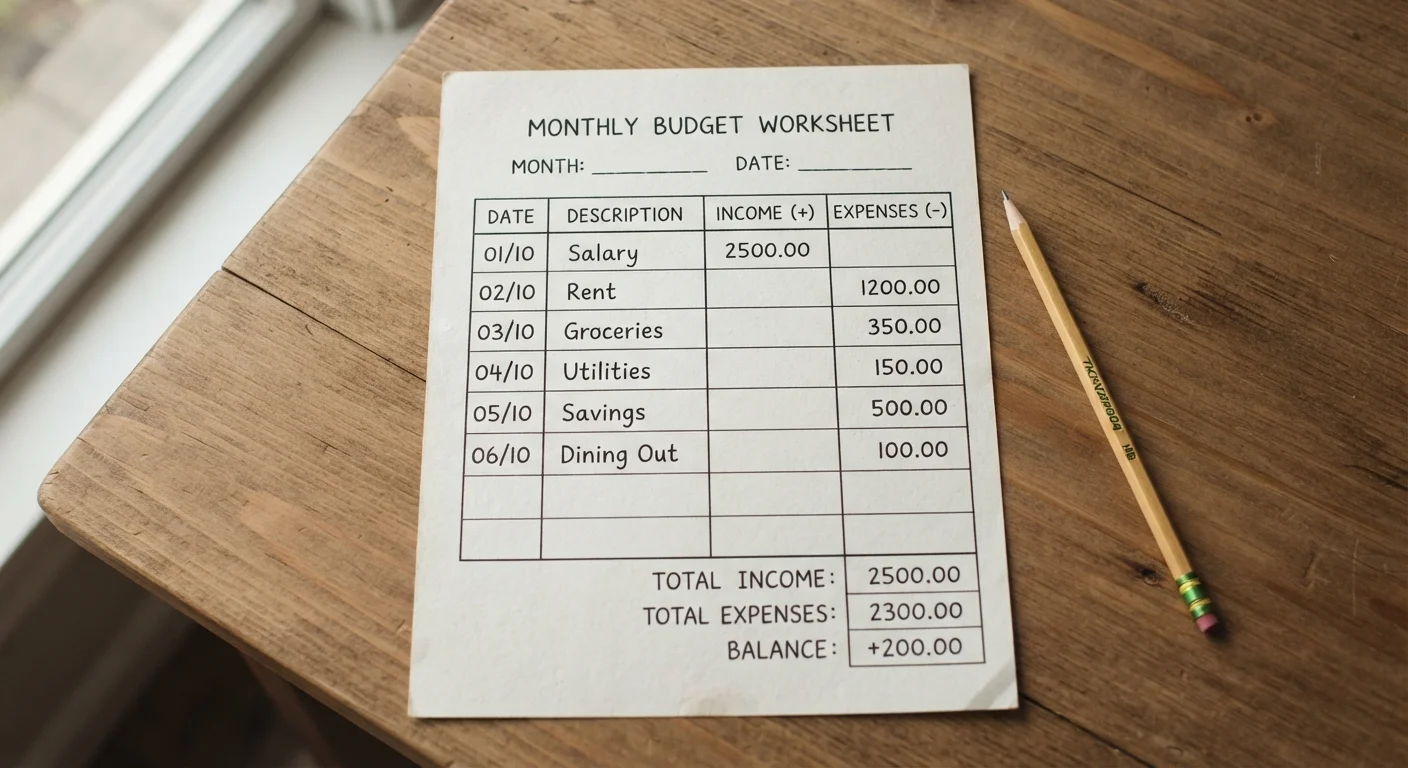
Start by listing every source of income you receive in a typical month and writing down the after-tax amount. Then list every expense you paid last month, grouping similar items together. Subtract total expenses from total income. The result tells you whether you spent more than you earned, less, or roughly the same.
If the number is negative, your expenses exceeded your income. If it is positive, you had money left over. Either result is information. A budget does not judge; it reports.
Once you have a baseline month recorded, you can set targets for the next month: amounts you intend to spend in each category. Those targets become your budget plan. Pairing a plan with automatic transfers for savings or bills can reduce the effort of staying on track.
~33%
Americans with a detailed household budget
According to Gallup survey data, roughly one in three American adults reports maintaining a detailed budget, suggesting most households track spending loosely if at all.
30%
Common housing cost guideline as share of gross income
This threshold is widely cited in personal finance education as a general reference point; individual circumstances vary considerably.
Why reviewing it regularly matters
A budget written once and never revisited has limited value. Life changes: income goes up or down, a new expense appears, an old one disappears. A budget that reflects last year's situation cannot accurately guide this year's decisions.
A monthly check-in of 15 to 20 minutes, comparing what you planned to spend with what you actually spent, is usually enough to keep a budget current. At least once a year, a more thorough review is worth doing. The Annual Financial Check-In checklist provides a structured framework for that kind of broader review.
This article is for general informational purposes only and does not constitute personalized financial advice. For guidance specific to your situation, consult a licensed financial adviser or other qualified professional.