

What benefits exist beyond VA health care
VA health care is what most people think of when they picture veterans benefits. For older Americans, though, the VA system extends well past medical appointments and prescriptions. Financial assistance programs, caregiver support, and survivor benefits are available to many veterans and their families, and they often go unclaimed simply because people do not know to ask.
This article covers the main non-health programs that matter most as veterans age. It is general information, not personalized financial or legal advice. For guidance specific to your situation, a VA-accredited claims agent, a Veterans Service Organization (VSO) representative, or a licensed attorney can help at no cost through most VSOs.
| Veterans eligible for VA pension | Low-income wartime veterans who meet service and disability thresholds (U.S. Department of Veterans Affairs) |
| Aid and Attendance benefit type | Pension supplement, not a separate program (U.S. Department of Veterans Affairs) |
| Program of Comprehensive Assistance for Family Caregivers (PCAFC) | Provides stipend, health insurance, and respite care to eligible caregivers (U.S. Department of Veterans Affairs, VA Caregiver Support Program) |
| Service requirement for most VA pension benefits | At least 90 days of active duty, with one day during a wartime period (U.S. Department of Veterans Affairs) |
| Asset limit for VA pension | Net worth limit applies; reviewed annually (U.S. Department of Veterans Affairs) |
| Survivors Pension | Available to surviving spouses and dependent children of wartime veterans (U.S. Department of Veterans Affairs) |
VA pension: income support for low-income wartime veterans
The VA pension is a needs-based monthly payment for wartime veterans who have limited income and net worth and who are either 65 or older, or permanently and totally disabled regardless of age. It is separate from military retirement pay and from service-connected disability compensation.
To qualify, a veteran generally must have served at least 90 days of active duty with at least one day during a recognized wartime period, received an honorable or other qualifying discharge, and fall within the VA's current net worth limit. The VA counts both income and assets when determining eligibility, and the threshold is reviewed periodically.
Veterans who need help with daily activities such as dressing, bathing, or eating, or who live in a nursing home or assisted living facility, may qualify for the Aid and Attendance pension supplement, which raises the monthly payment significantly. Veterans who are largely confined to their home due to disability may qualify for the Housebound supplement instead. Only one of these two supplements can be received at a time.
Surviving spouses and dependent children of deceased wartime veterans may be eligible for the Survivors Pension, which follows similar income and net worth rules. See our overview of low-income benefits for older Americans for context on how these VA programs fit alongside federal and state assistance options.
Caregiver support programs
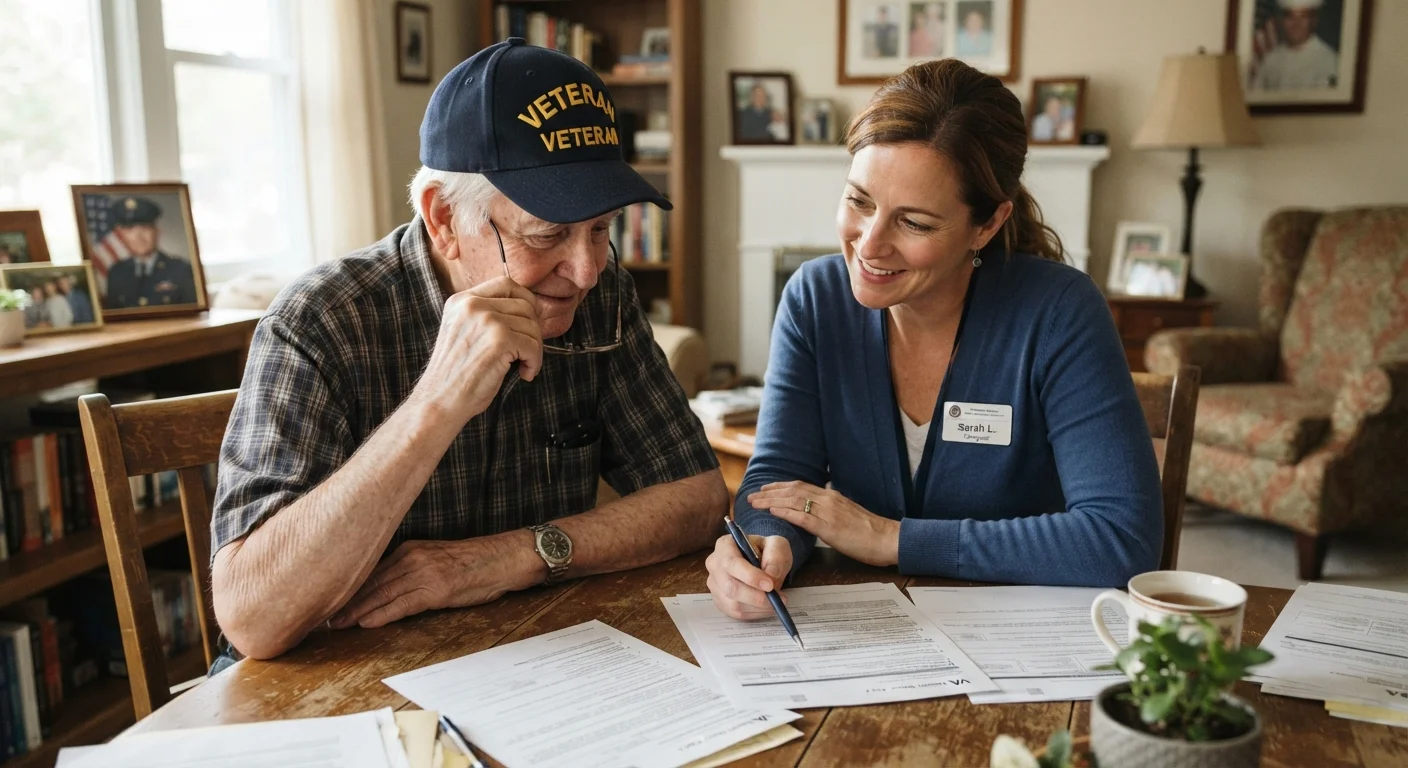
The VA runs two caregiver programs. The Program of Comprehensive Assistance for Family Caregivers (PCAFC) is the more expansive of the two. Eligible caregivers of qualifying veterans can receive a monthly stipend, access to health insurance through CHAMPVA if they have no other coverage, mental health services, and respite care (temporary relief from caregiving duties). Eligibility depends on the veteran's service era, disability rating, and care needs.
The Program of General Caregiver Support Services (PGCSS) is open to caregivers of veterans enrolled in VA health care regardless of when they served. It does not include a stipend but does provide education, peer support groups, and referrals to community resources.
Families weighing care options alongside these benefits may find it useful to read our guide on planning for long-term care or the comparison of assisted living and nursing home settings.
VA pension
A needs-based financial benefit for wartime veterans with limited income and net worth who are permanently and totally disabled or aged 65 and older.
Aid and Attendance
A higher pension payment available to veterans or surviving spouses who need help with daily activities such as bathing, dressing, or eating, or who are housebound.
Housebound benefit
An increased pension payment for veterans who are substantially confined to their home due to a permanent disability.
PCAFC
The Program of Comprehensive Assistance for Family Caregivers, a VA program that provides financial and practical support to caregivers of eligible veterans.
Survivors Pension
A VA benefit for the surviving spouse or dependent children of a deceased wartime veteran, based on financial need.
Net worth limit
The maximum combined value of assets and income a veteran or survivor may have while still qualifying for VA pension benefits; this figure is adjusted periodically.
How to apply and where to get help
VA pension and Aid and Attendance claims are filed using VA Form 21P-527EZ (for veterans) or VA Form 21P-534EZ (for survivors). Applications can be submitted online through VA.gov, by mail, or in person at a VA regional office. Because these claims require documentation of financial and medical status, working with a VA-accredited VSO representative at no cost is a practical first step.
State Veterans Service Offices also offer free assistance and can connect applicants to state-specific programs that supplement federal benefits. For veterans managing broader financial decisions in retirement, our guide on Social Security misconceptions addresses how federal benefit programs interact, and the Finance hub covers general retirement planning concepts.
A VA-accredited claims agent or VSO representative is the most reliable starting point. They can review a veteran's discharge documentation, service records, and financial situation to identify which programs are worth pursuing.
This article is for general informational purposes only and does not constitute financial, legal, or benefits advice. Eligibility rules, payment rates, and program details change over time. Consult a VA-accredited representative or licensed professional for guidance specific to your circumstances.